1924
On 3 March, Law 430 placed every school under a single ministry.34
1881 — 1938
A life, with photographs, documents, film footage and the songs he loved
Preparing
Contents
About twenty minutes. Headphones recommended.
Dolmabahçe Palace, Istanbul
09:05
Thursday, 10 November 1938
At five past nine, a country fell silent.
The story begins fifty-seven years earlier, in Salonica.
Scroll to wind back
Kardeşimle beraber bakla tarlasının ortasındaki bir kulübede oturduğumuz ve kargaları kovmakla uğraştığımızı unutamam.
I cannot forget how my sister and I sat in a hut in the middle of the bean field, busy chasing off the crows.
Mustafa Kemal, 19221
Salonica, 1881
Mustafa was born in Salonica in 1881. When he reached school age the household disagreed: his mother Zübeyde Hanım wanted him to start at the neighbourhood school, with hymns; his father Ali Rıza Efendi preferred the Şemsi Efendi school, which taught by the new method.2 The boy pleased his mother first, and a few days later moved to the school his father had chosen.
After the loss of his father the family took refuge on his uncle’s farm outside Salonica. Years later, what he told a journalist about his childhood was mostly those days: chasing crows in the field with his sister.1
Back in the city, a teacher at the civil secondary school punished him harshly, and his grandmother took him out.2 He wanted to be a soldier; his mother did not want it. “Without letting her notice, I went to the military secondary school by myself and sat the examination,” he recalled.1
His mathematics teacher there was also called Mustafa. One day he told him: “There should be some difference between us. From now on let your name be Mustafa Kemal.”1
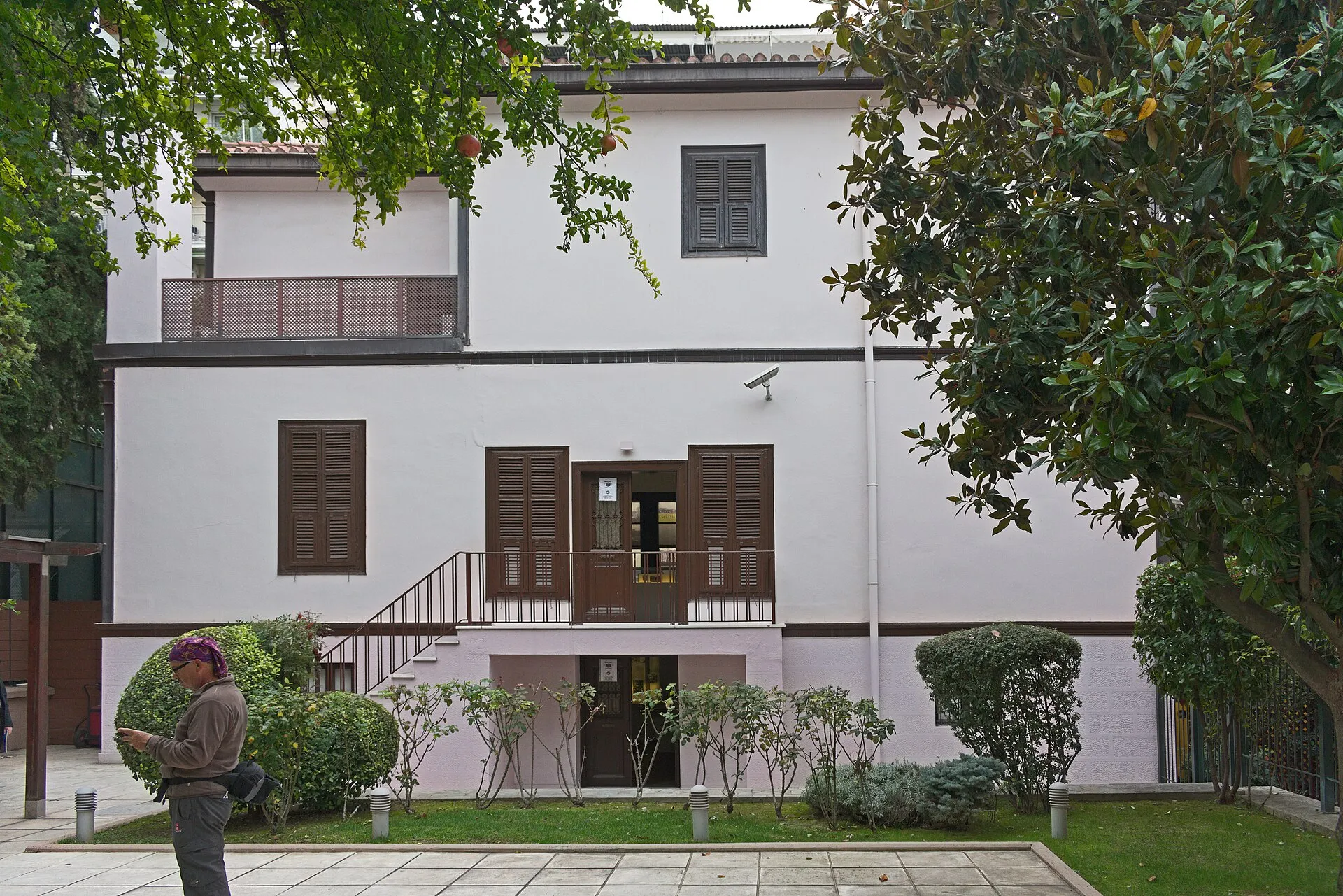
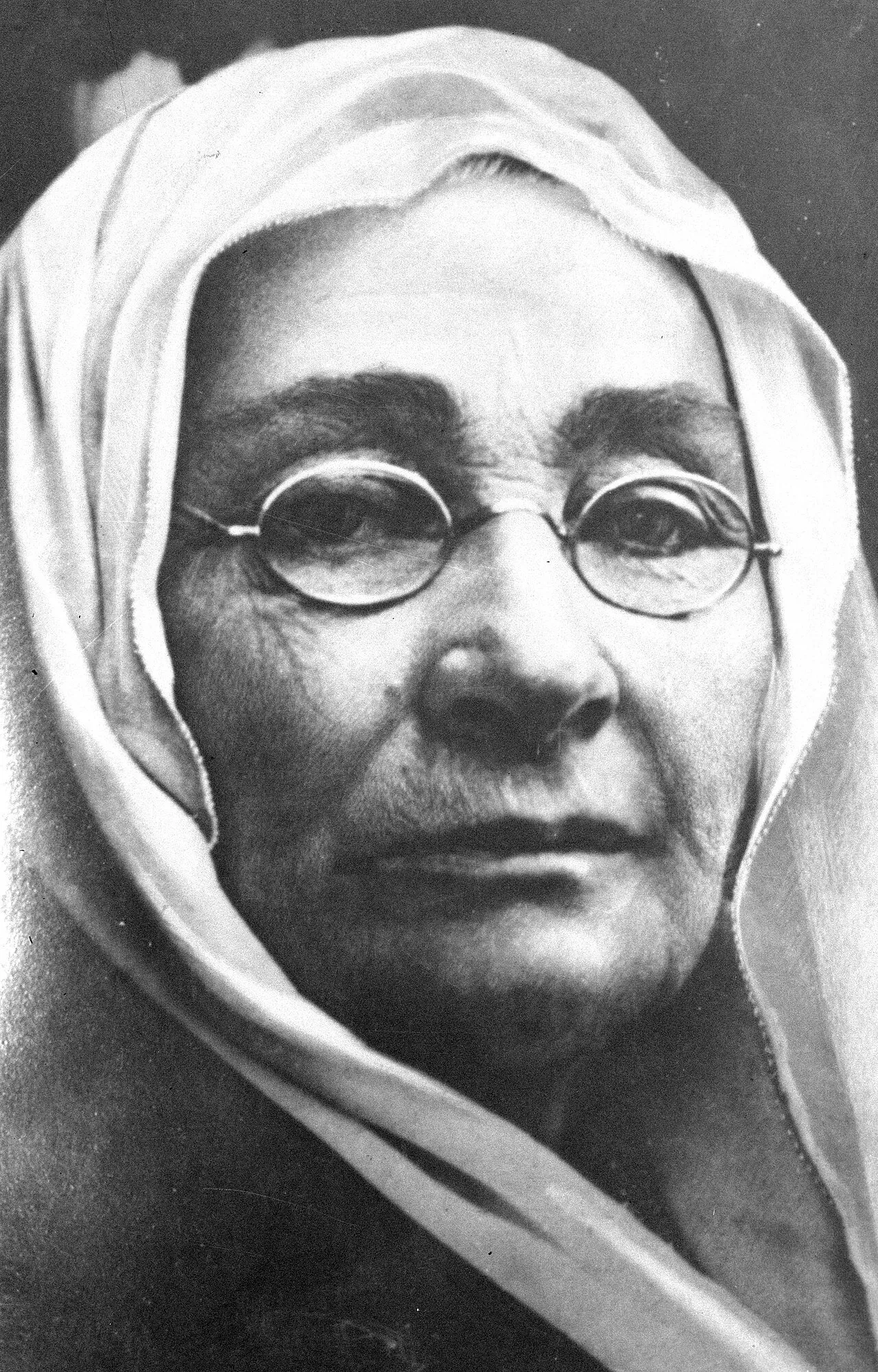
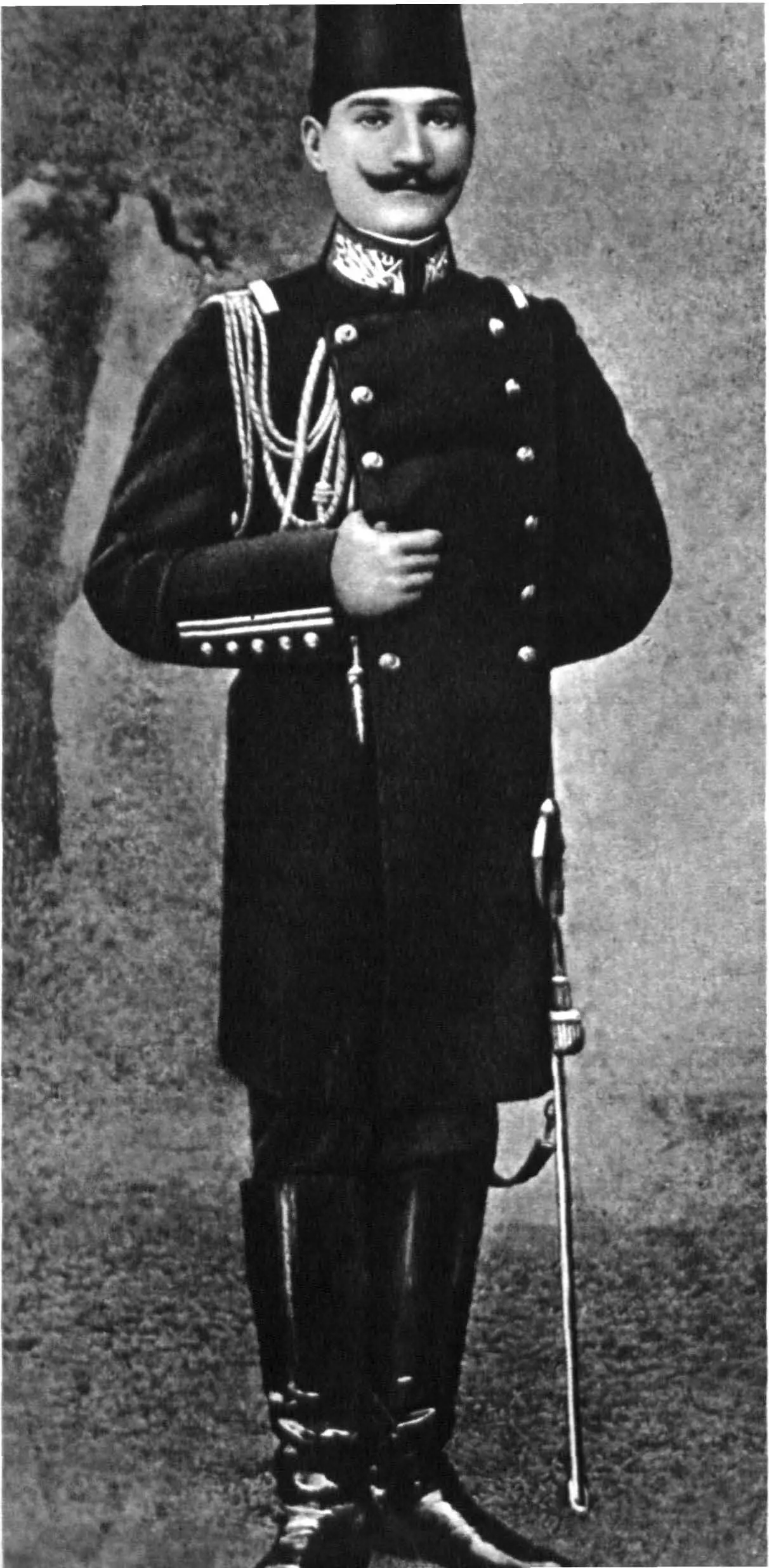
From the school registers2
In 1896 he was enrolled at the Manastır Military High School as cadet number 7348; he finished his third year second in a class of fifty-four.2 His classmate Ömer Naci gave him a taste for poetry. A teacher warned that it would draw him away from soldiering, and he gave up verse, though he kept the wish to write well.1
On 13 March 1899 he entered the War College in Istanbul, entered in the register as “Mustafa Kemal Efendi, Salonica”. He graduated eighth in a class of 459.2
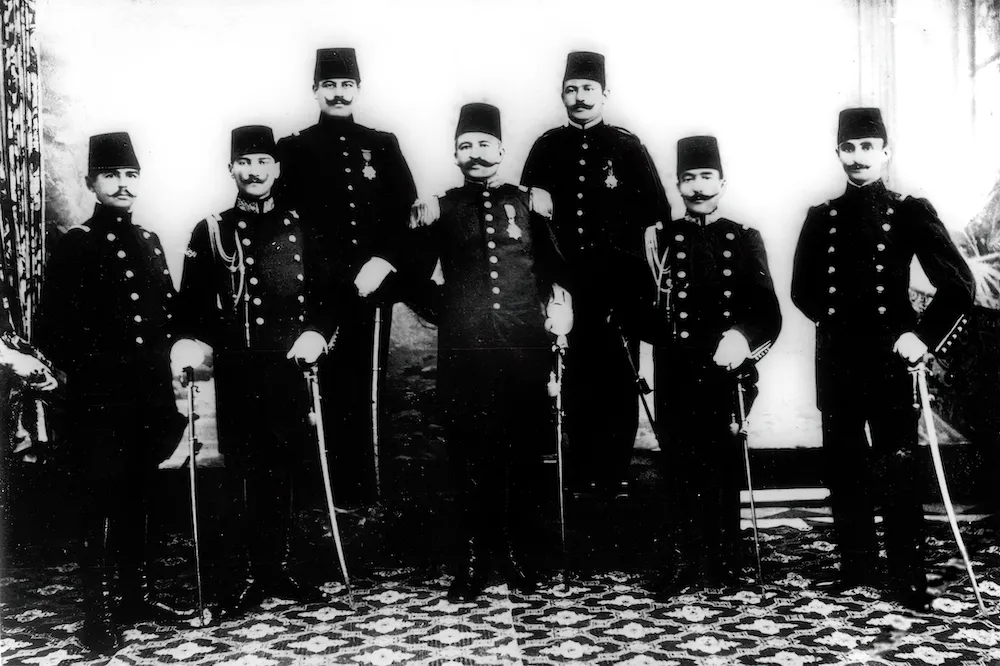
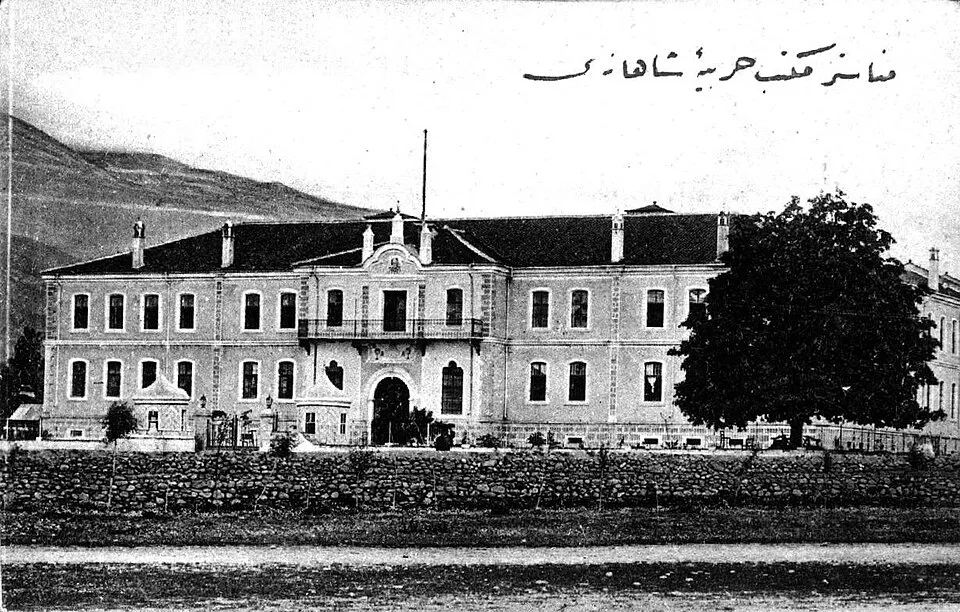
In his War College years he and his friends produced a newspaper: “We founded a newspaper at the school, written by hand.”1 On 11 January 1905 he became a staff captain and was assigned to the Fifth Army.2 He himself tells how he was arrested and questioned in those days, and how it ended: “They banished me to Syria.”1
1911 — 1915
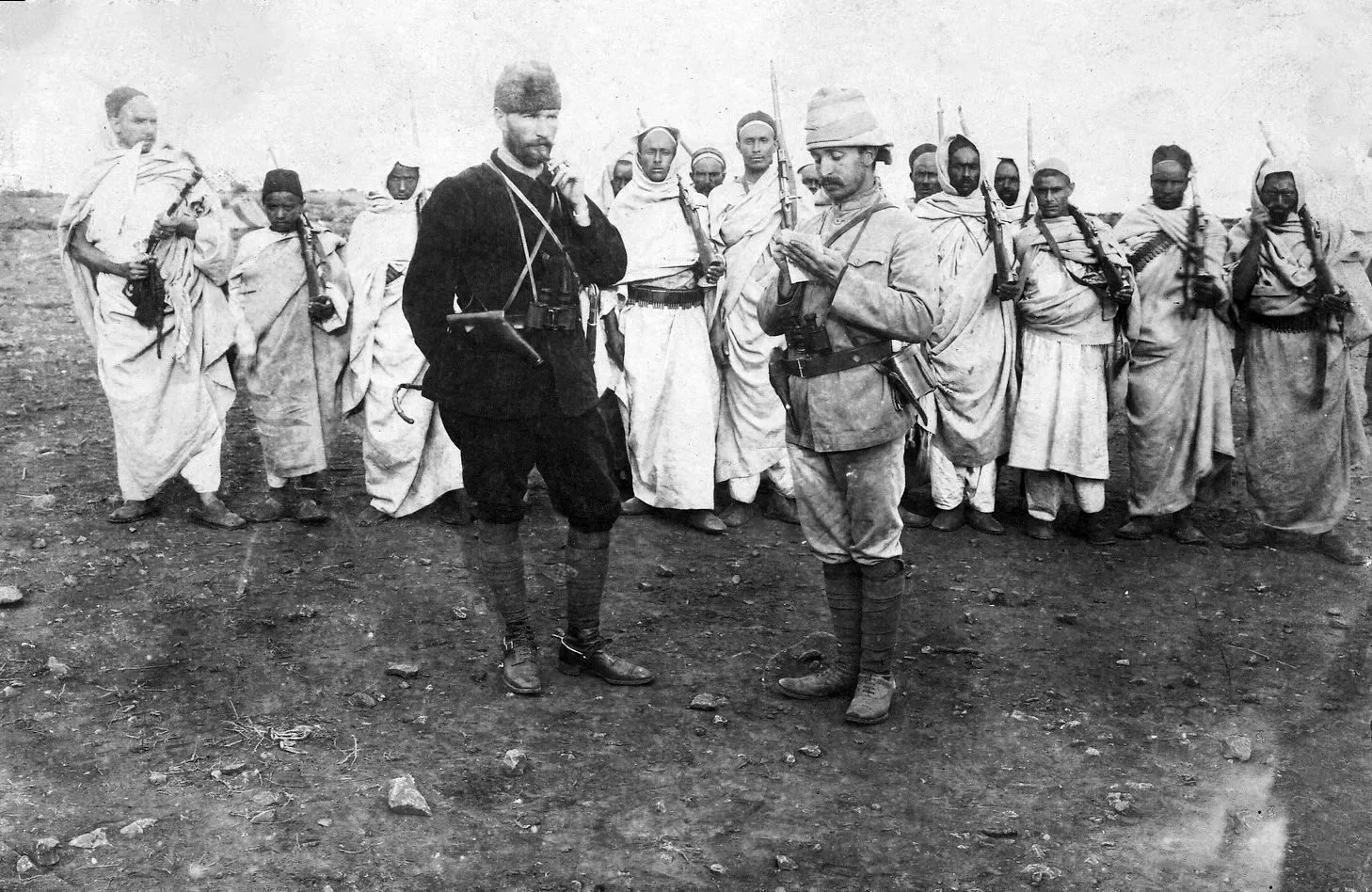
When Italy attacked Tripolitania in 1911 he went as a volunteer. In January 1912 he was wounded in the left eye in the fighting at Derna and spent about a month in the Red Crescent hospital.4 A photograph taken on 8 May 1912 shows him dictating orders in front of local volunteers.5
In 1913 he was appointed military attaché in Sofia; he took up the post on 20 November.6
Gallipoli Peninsula
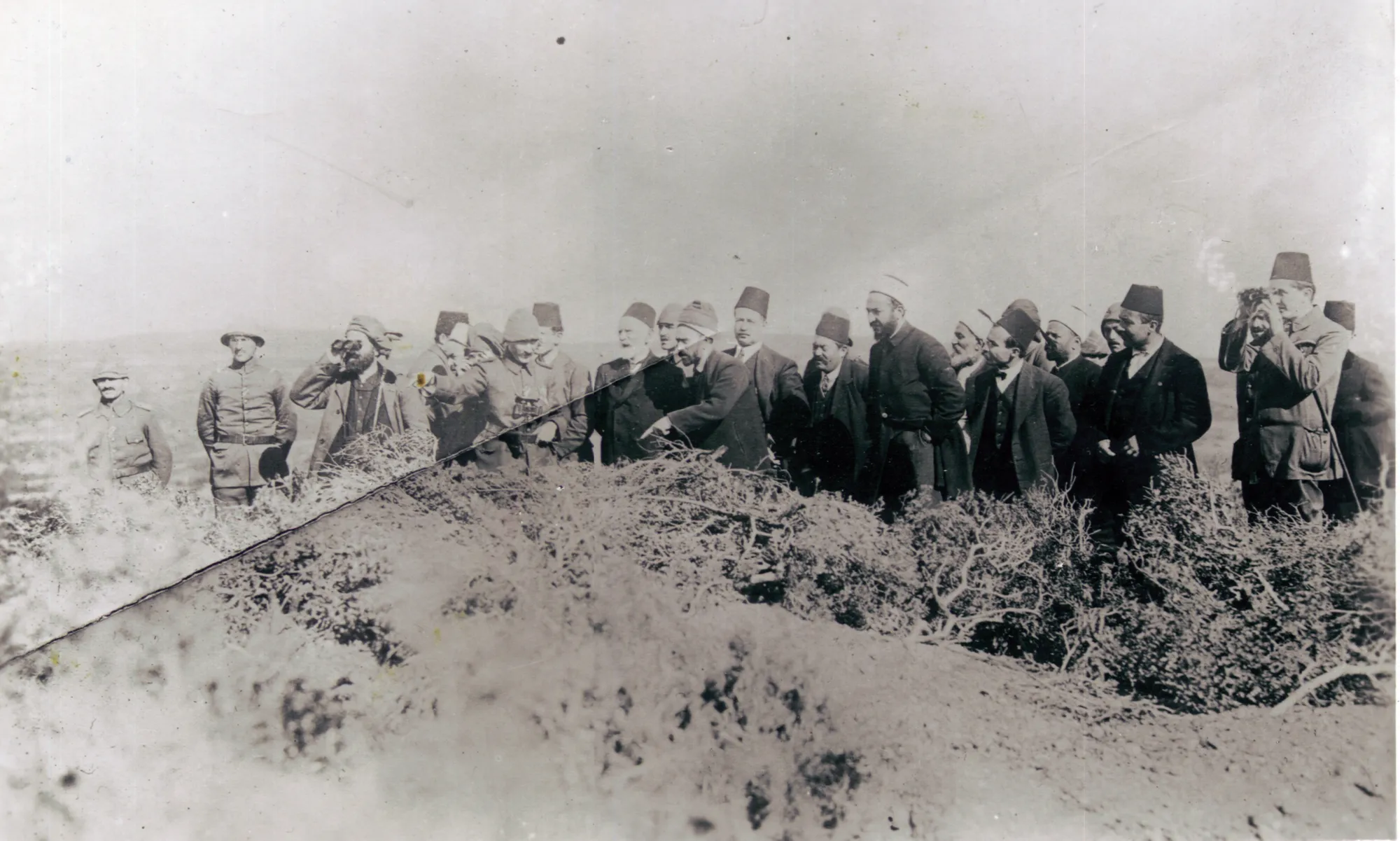
Until the morning of 25 April the 19th Division waited around this village as the army reserve.9
When the landings began he sent the 57th Regiment forward; the enemy’s advance was halted at Chunuk Bair.10
He stayed at the front. On 1 June he was promoted to colonel.10
In early August he took command of the Anafartalar Group. 9 August: the first victory at Anafartalar.10
A bayonet charge at dawn on 10 August. Shrapnel striking his chest shattered the watch in his pocket.10
21 August: the second victory at Anafartalar. He left the front on 10 December.10
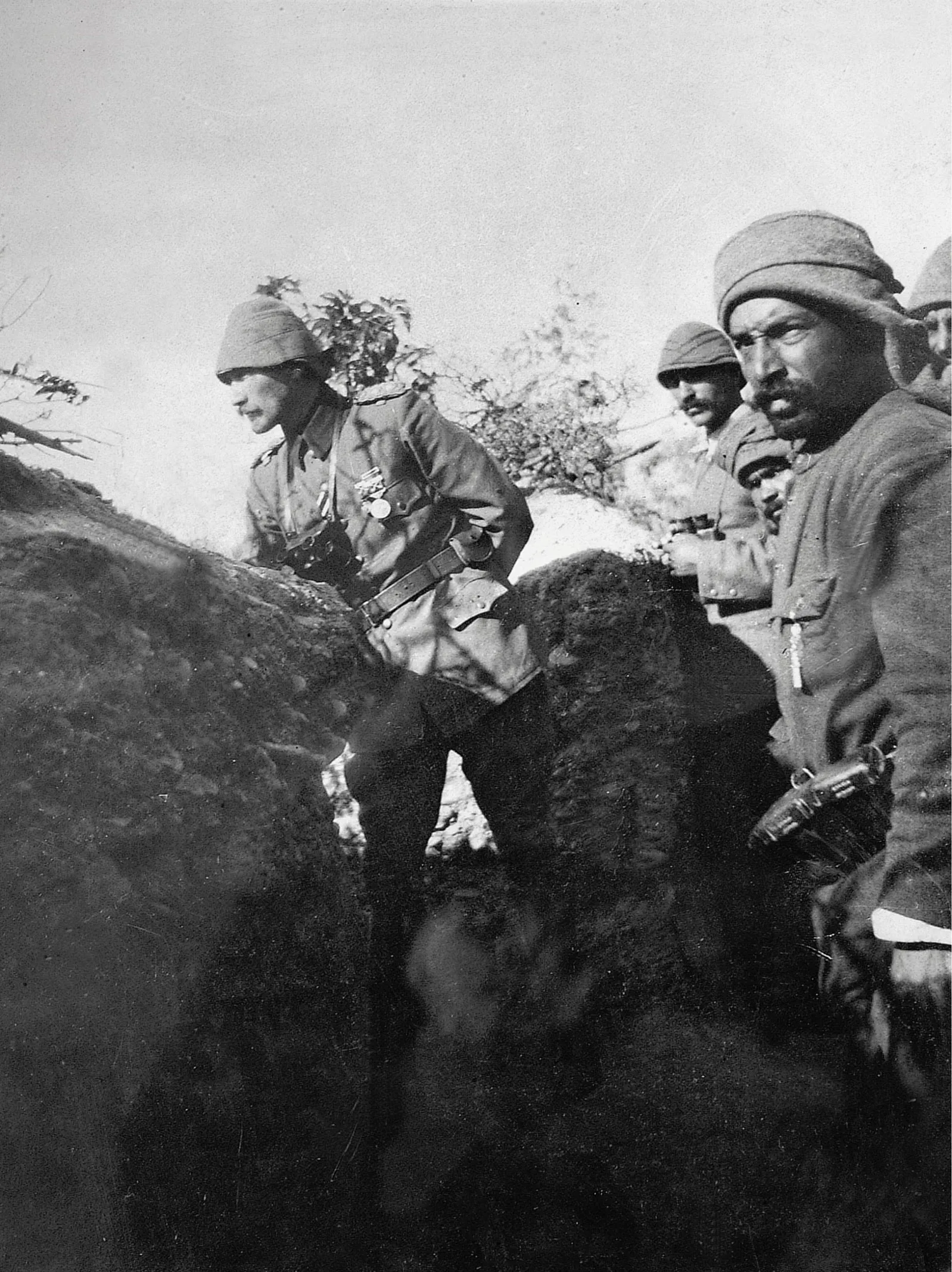
On the morning of 25 April 1915, when the landings began at Arıburnu, he commanded the 19th Division. On Hill 261 he met soldiers falling back because their ammunition had run out. “You do not run from the enemy, I said.” He had them fix bayonets and lie down; the men opposite lay down too. In the minutes this bought, the 57th Regiment came up.7
Three years later he himself repeated the order he gave that regiment:
Size ben taarruz emretmiyorum, ölmeyi emrediyorum. Biz ölünceye kadar geçecek zaman zarfında yerimize başka kuvvetler ve kumandanlar kaim olabilir.
I am not ordering you to attack; I am ordering you to die. In the time it takes us to die, other forces and other commanders can take our place.
Arıburnu, 25 April 19157
Istanbul, 13 November 1918. The occupation fleet lies off Dolmabahçe.
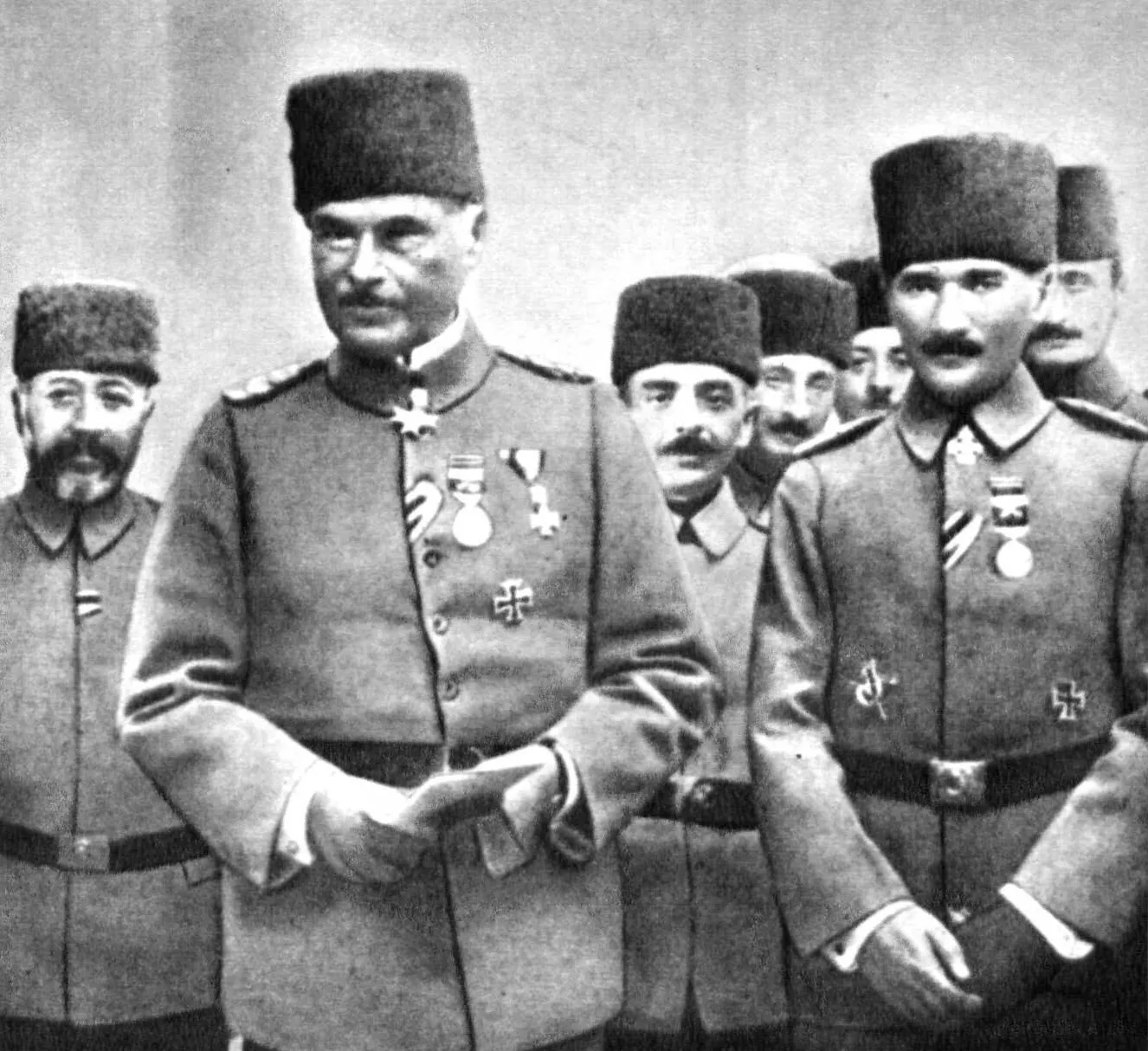
In 1916 he commanded XVI Corps. He reached Diyarbakır on 27 March and was made a general on 1 April; Muş and Bitlis were retaken.11
He spent the last months of the war in Syria. On 31 October 1918, the day after the armistice, he took over command of the Yıldırım Army Group; on 7 November that headquarters too was abolished.11
On 13 November 1918 he arrived in Istanbul.11 The occupation fleet lay at anchor off Dolmabahçe.6 According to his aide Cevat Abbas, he looked at the ships and said:12
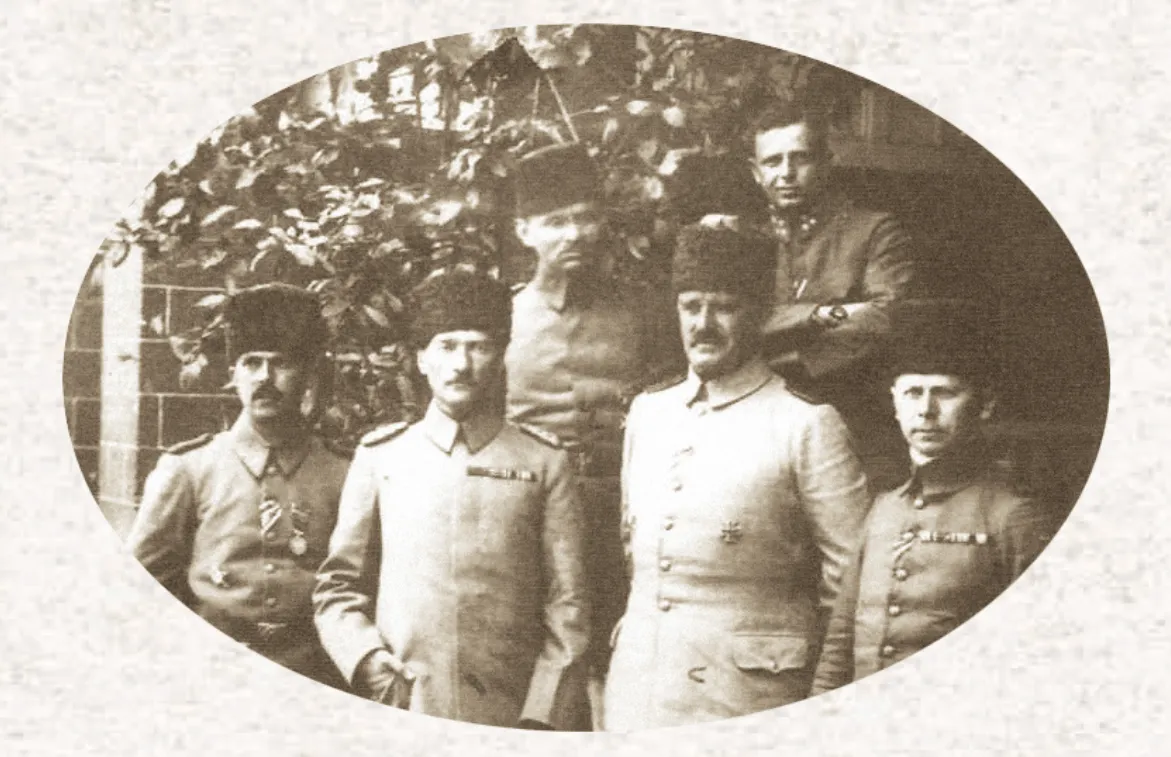
Geldikleri gibi giderler.
As they have come, so they will go.
As reported by his aide Cevat Abbas Gürer, 13 November 1918
1919
On 16 May 1919 the steamer Bandırma left Istanbul. Three days later, on 19 May, Mustafa Kemal Pasha and his staff landed at Samsun.14
The Bandırma sets out.
The landing.
Headquarters moves here; three days later a circular asks for public meetings all over the country.15
On 22 June the Amasya Circular is issued.15
He gives up his official post and leaves the army.16 Kâzım Karabekir: “We are all at your orders, Pasha.”17
On 4 September the congress meets and elects Mustafa Kemal Pasha its chairman.16
On the Dikmen ridge thousands of seymens, on foot and mounted, come out to meet him.18
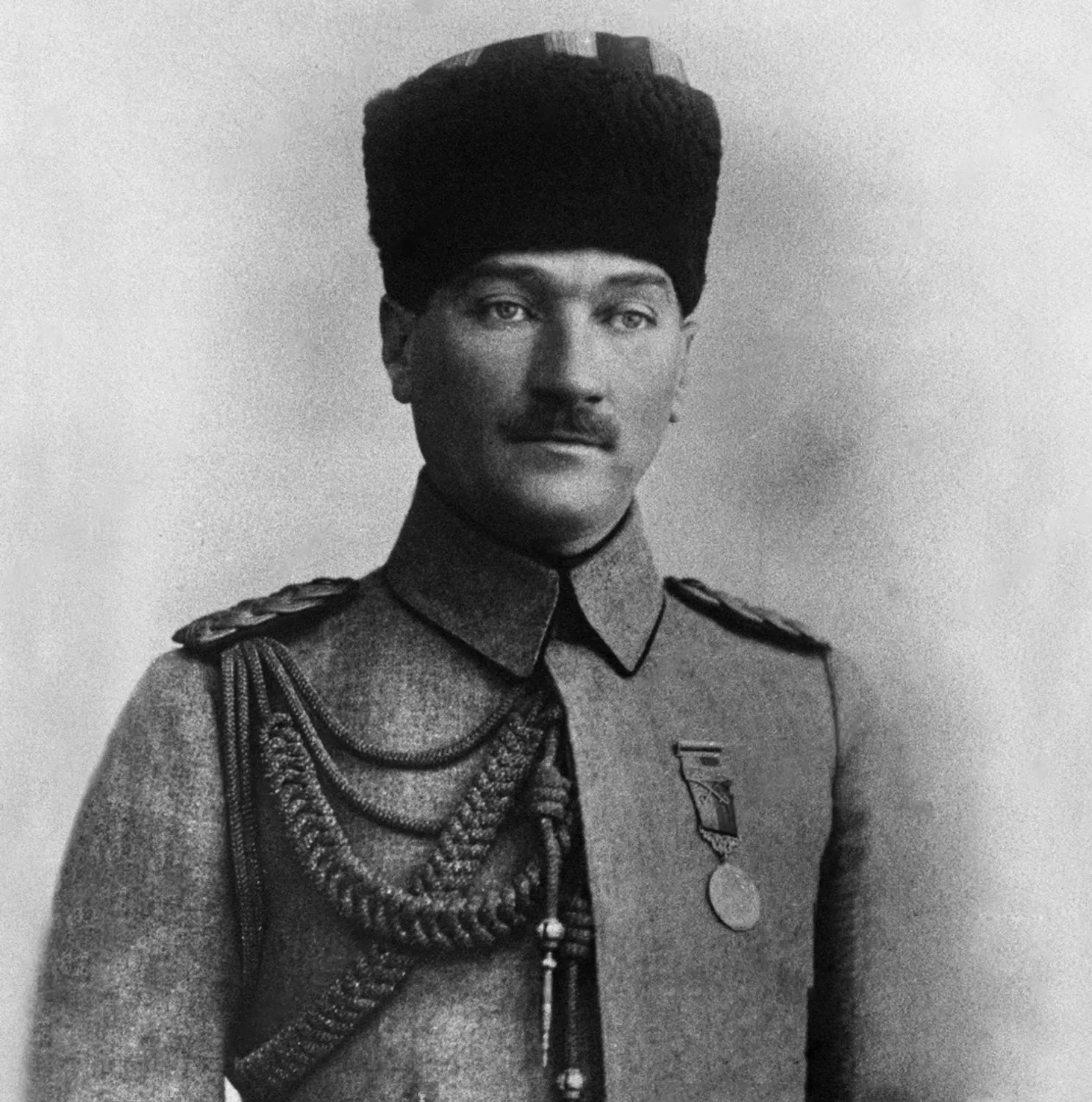
He reached Ankara on 27 December 1919 and was lodged at the Agricultural School outside the town, where he stayed for 118 days.19
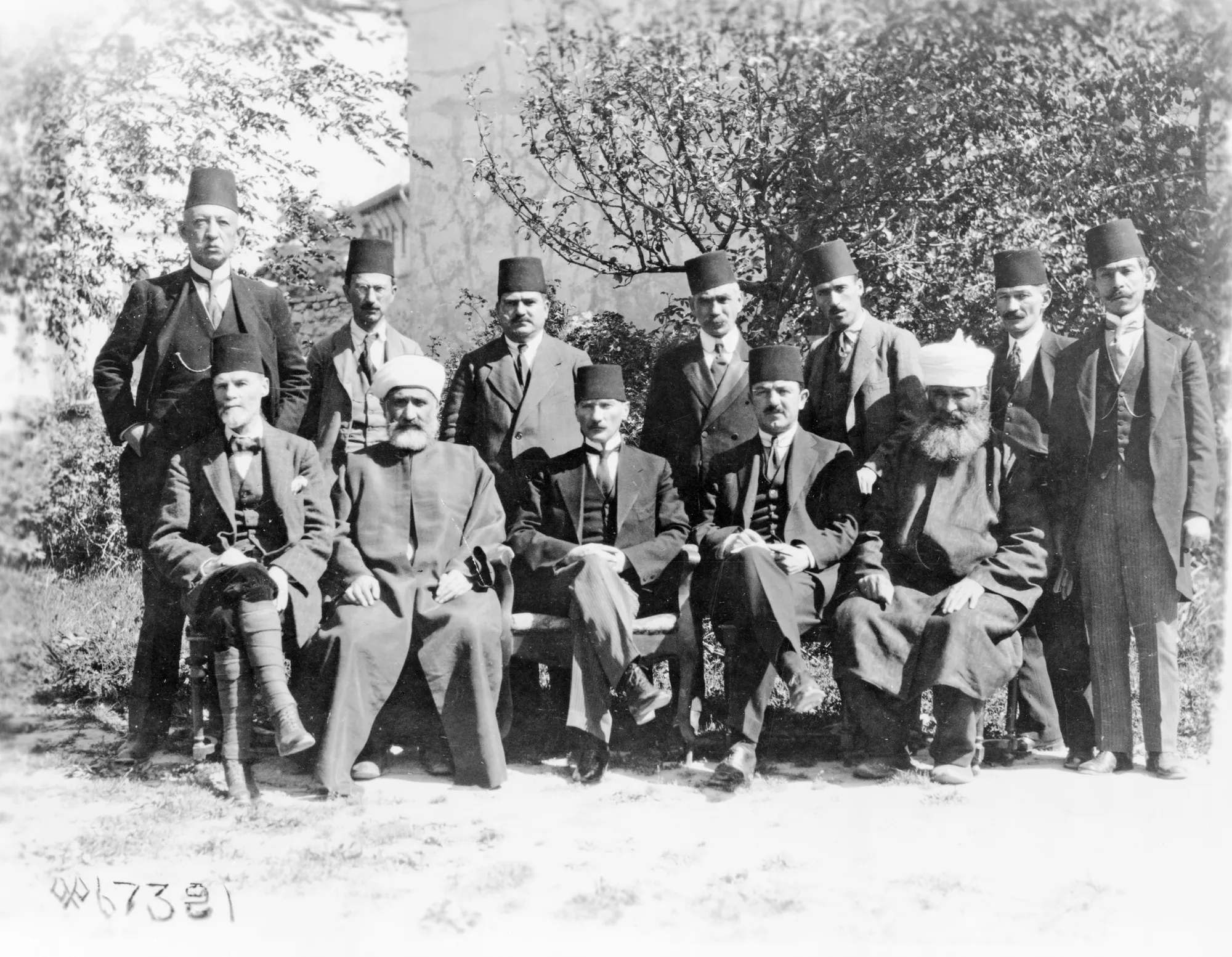
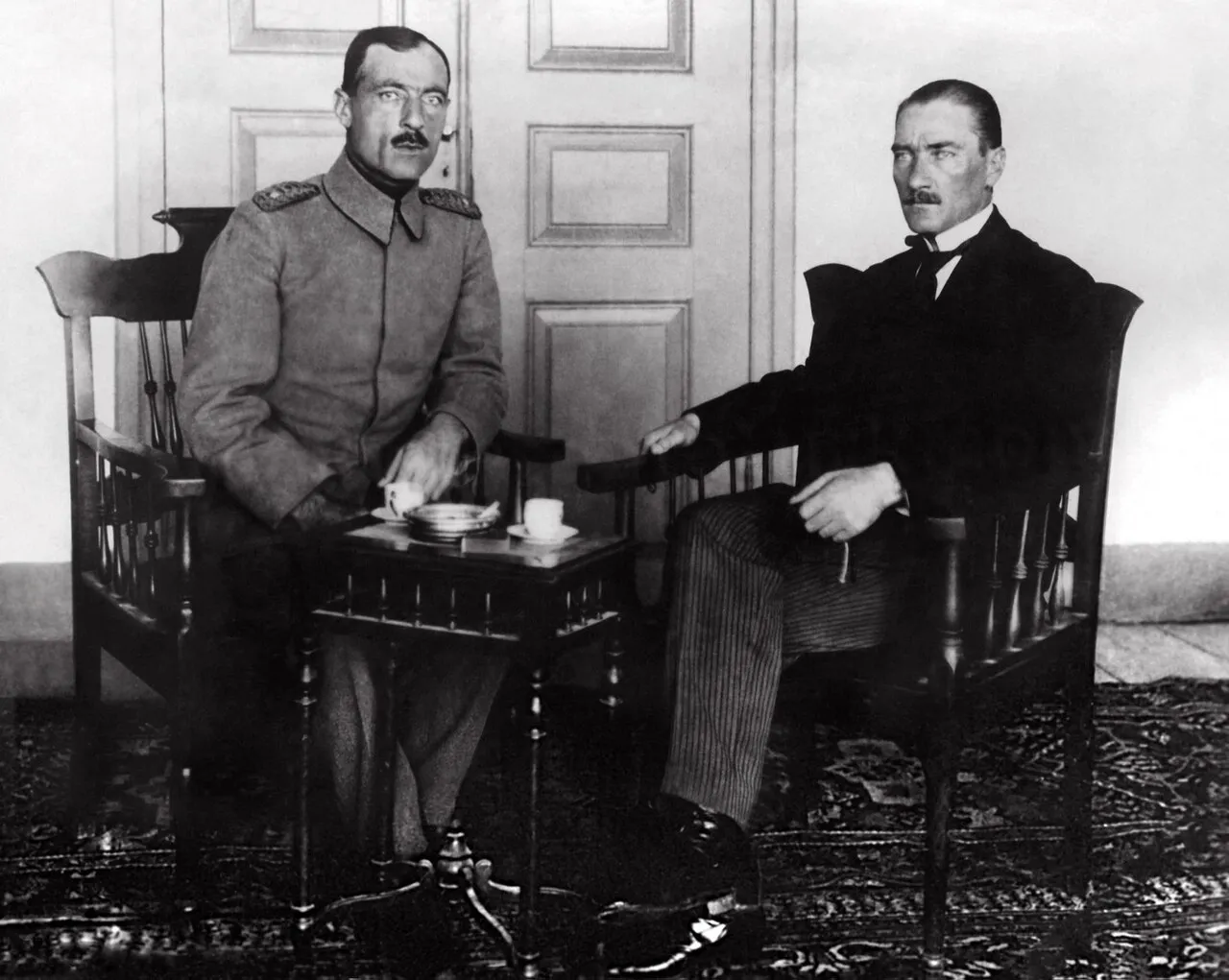
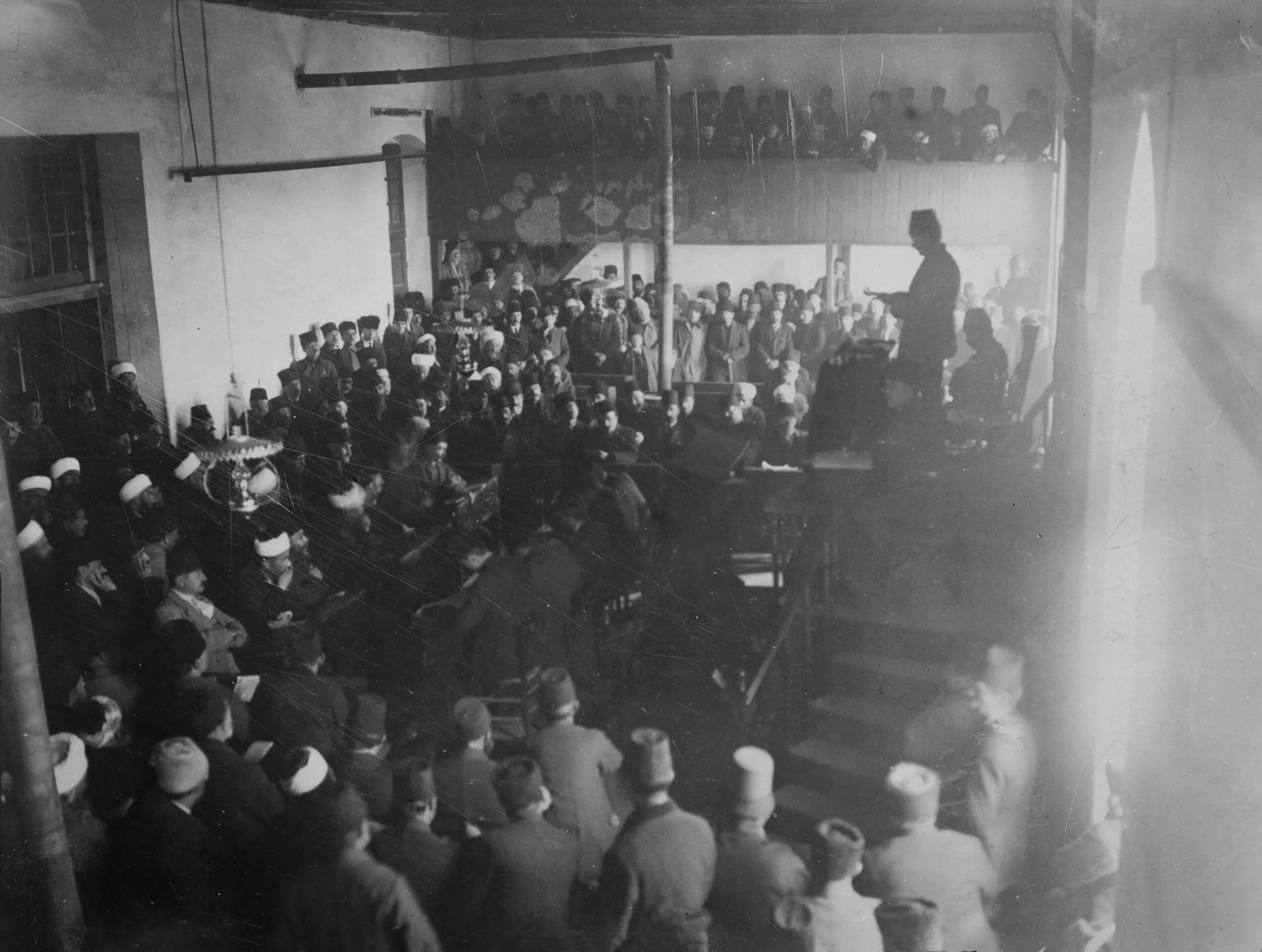
Grand National Assembly
Friday, 23 April 1336 (1920)
On Friday 23 April 1920, after prayers at Hacı Bayram, the Grand National Assembly opened. On the first day there were 115 deputies in the hall; Şerif Bey of Sinop presided as the oldest member. At the second sitting Mustafa Kemal was elected Speaker.20
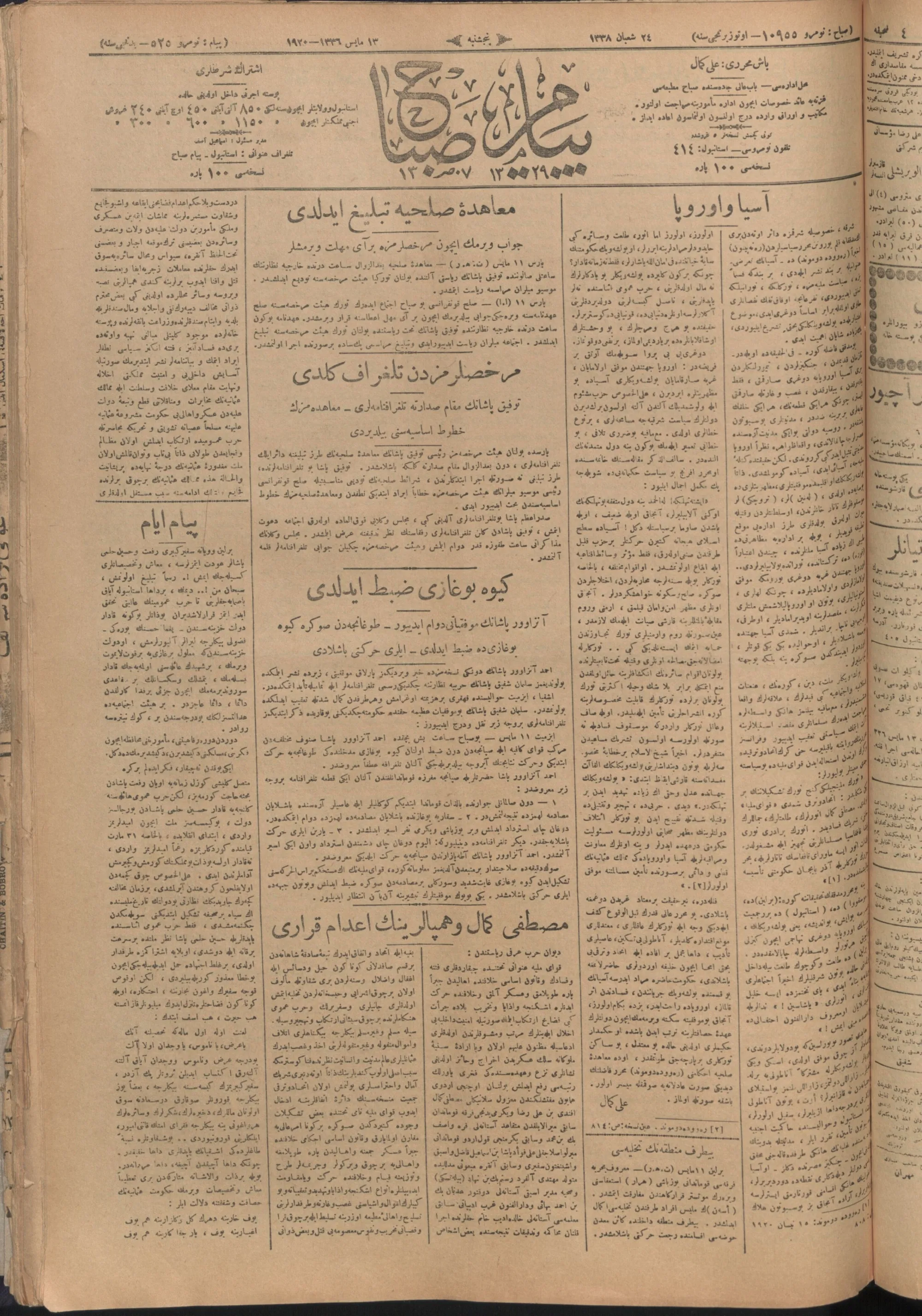
Eighteen days later, on 11 May 1920, the court-martial in Istanbul sentenced him to death in his absence; the Sultan confirmed the sentence on 24 May.21
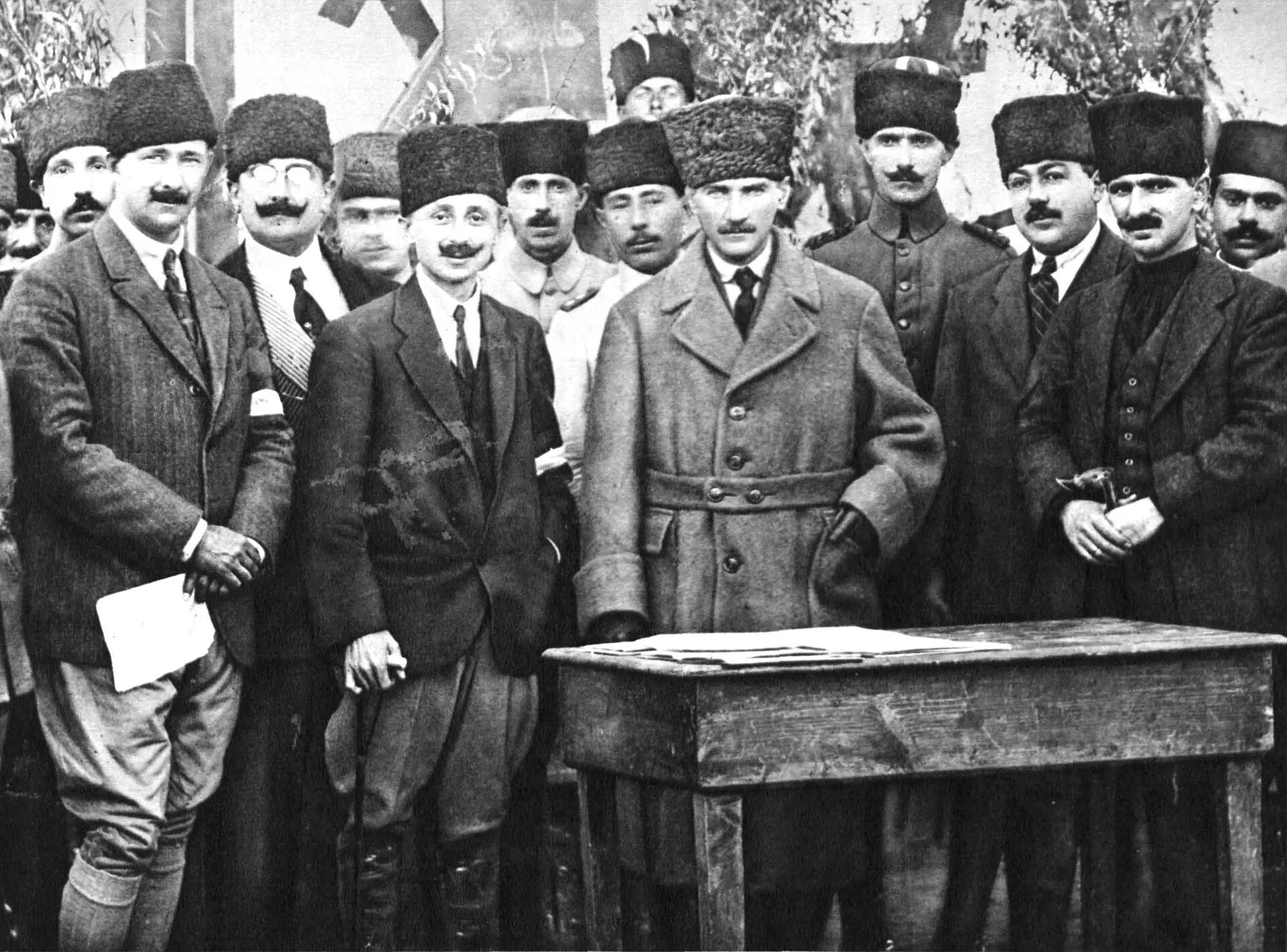
In the summer of 1921 the front drew near Ankara. As commander-in-chief he issued the National Obligations orders of 7–8 August, asking the people to supply the army’s needs.22 At Sakarya the fighting lasted from 23 August to 13 September, twenty-two days and twenty-two nights. Before the battle he had fallen from his horse and broken a rib; he directed it in that state.22
On 19 September 1921 the Assembly gave him the rank of Marshal and the title Gazi.23
Polatlı — Haymana
On 12 August he was at Western Front headquarters; it was here that he fell from his horse.25
The commander-in-chief’s headquarters was set up in this village.26
The battle began on 23 August. Mangal Dağı was lost on the first day, Çal Dağı on 2 September.26
On 10 September the general counter-attack began; Duatepe was retaken the same day.26
On 12 September Kartaltepe was retaken.27 The next day the battle ended in victory.25
Hattı müdafaa yoktur, sathı müdafaa vardır. O satıh bütün vatandır.
There is no line of defence, only a surface of defence. That surface is the whole homeland.
Sakarya, 26 August 192124
26 August 1922
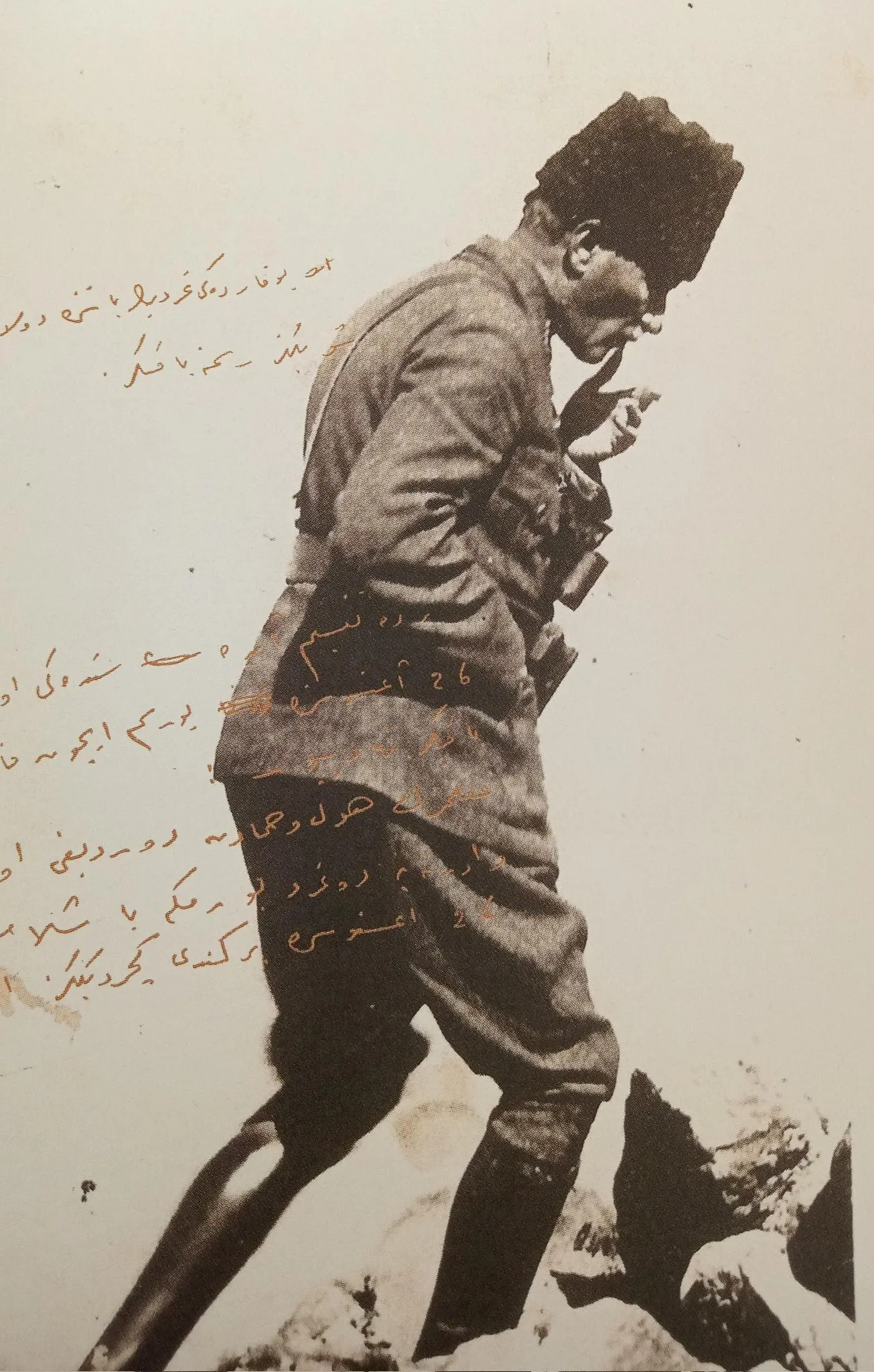
Before dawn on 26 August 1922 he was at the observation post on Kocatepe, with Fevzi, İsmet and Nurettin Pashas beside him. The guns opened fire at first light.28
Five days later, on 1 September, he sent the armies an order one sentence long. On 9 September the Turkish army entered İzmir.28
Afyon — İzmir
On 26 August the offensive opened at 05:30 with artillery fire.29
On 27 August Afyon was liberated.29
30 August: the battle later named the Battle of the Commander-in-Chief.29
On 3 September he came from Dumlupınar to Uşak. General Trikoupis had been captured the day before.29
On 8 September Manisa was liberated.29
On 9 September the army entered İzmir; he arrived in the city the next day.29
Ordular, ilk hedefiniz Akdeniz’dir. İleri!
Armies, your first objective is the Mediterranean. Forward!
1 September 192228
1922 — 1923
29101923
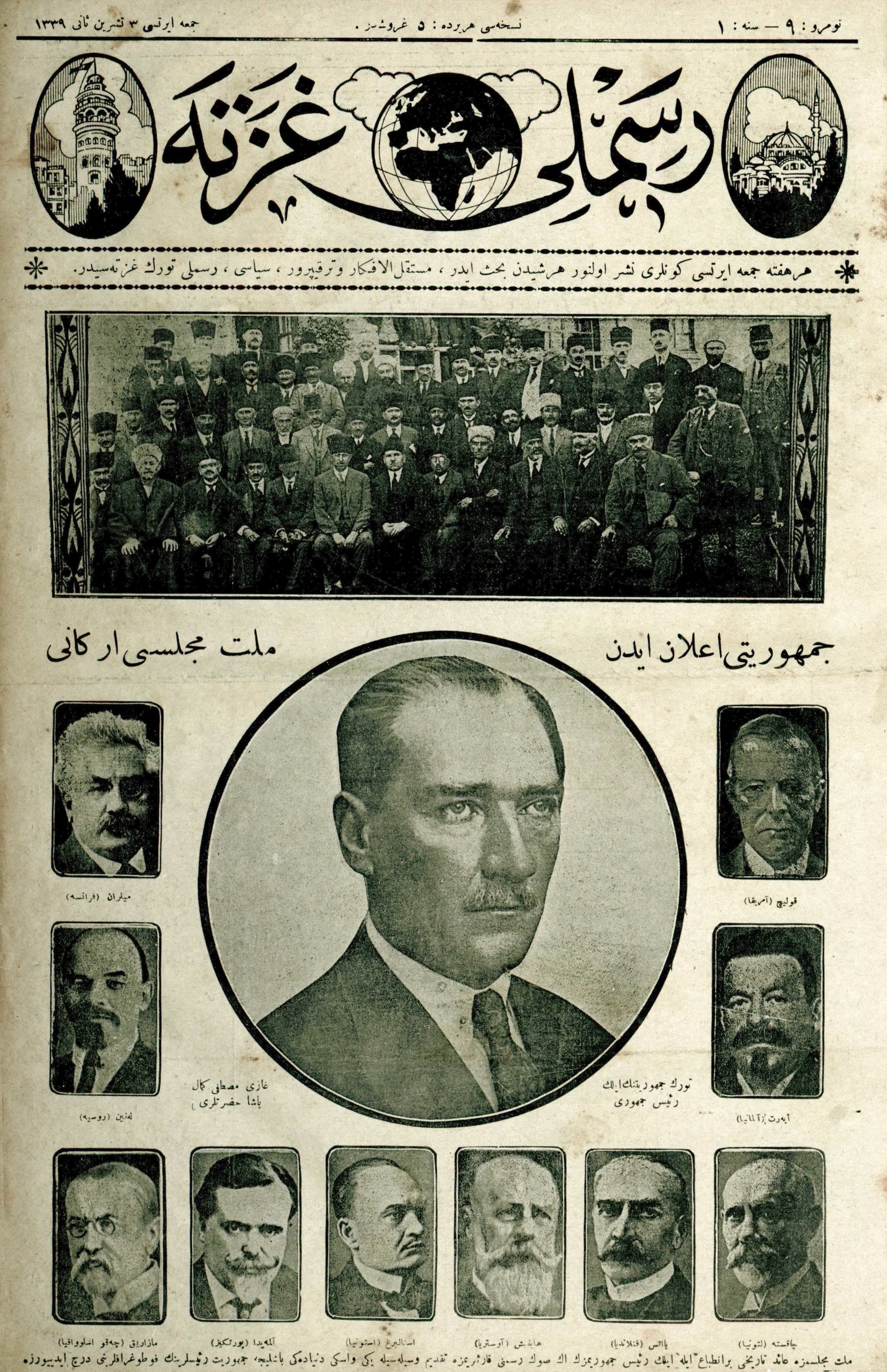
On 1 November 1922 the sultanate was abolished.16 On 24 July 1923 peace was signed at Lausanne.30
On the evening of 28 October 1923 İsmet Pasha, Kâzım Pasha, Fethi Bey, Fuat Bey and Ruşen Eşref were at his table at Çankaya. Over dinner he told them: “Tomorrow we shall proclaim the republic.” After the guests left he and İsmet Pasha wrote the text of the amendment together.31
The next evening the Assembly passed it.31 He was elected the first president by all 158 members who voted.6
1924 — 1934
1924
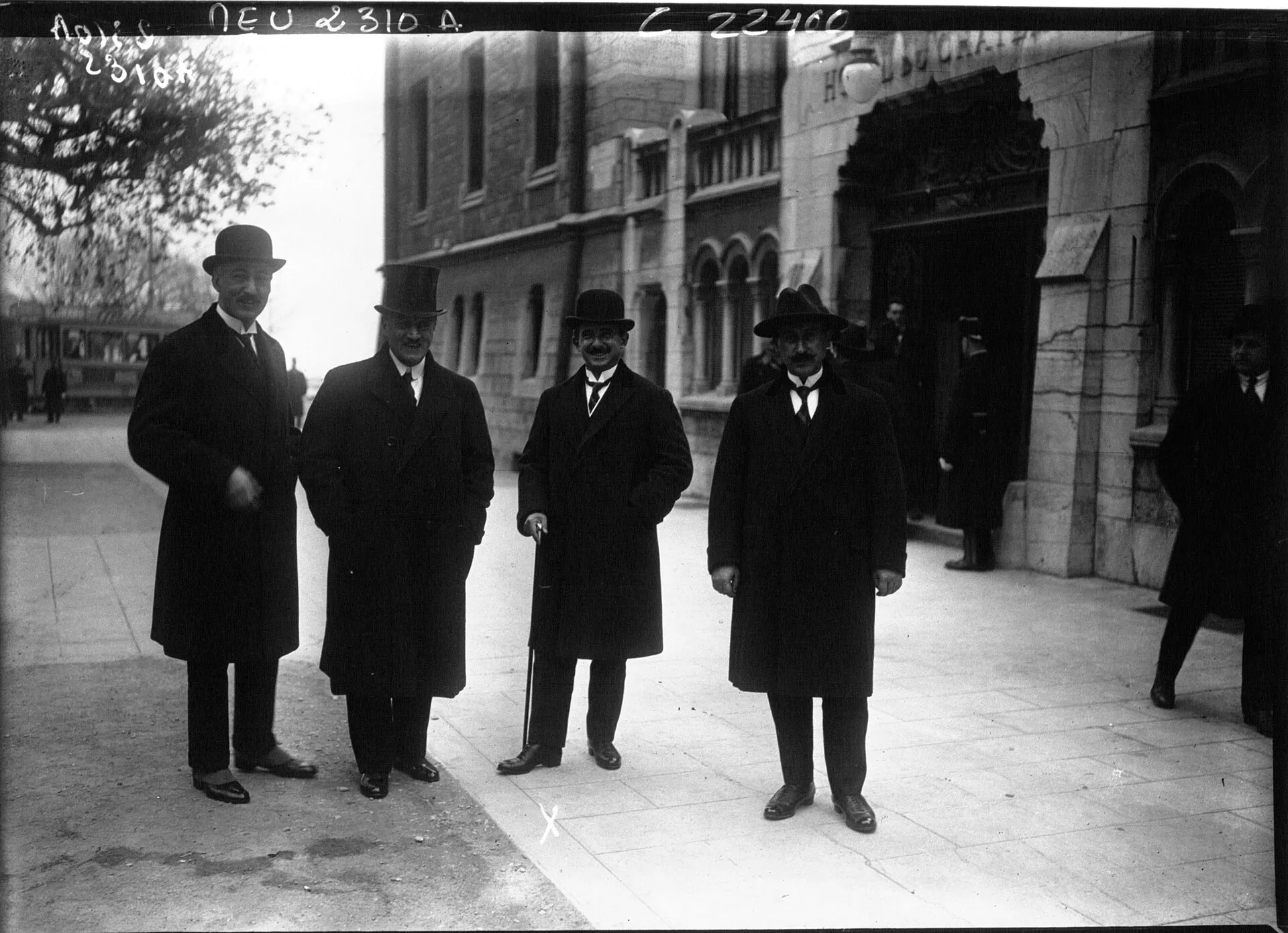
On 3 March, Law 430 placed every school under a single ministry.34
1925
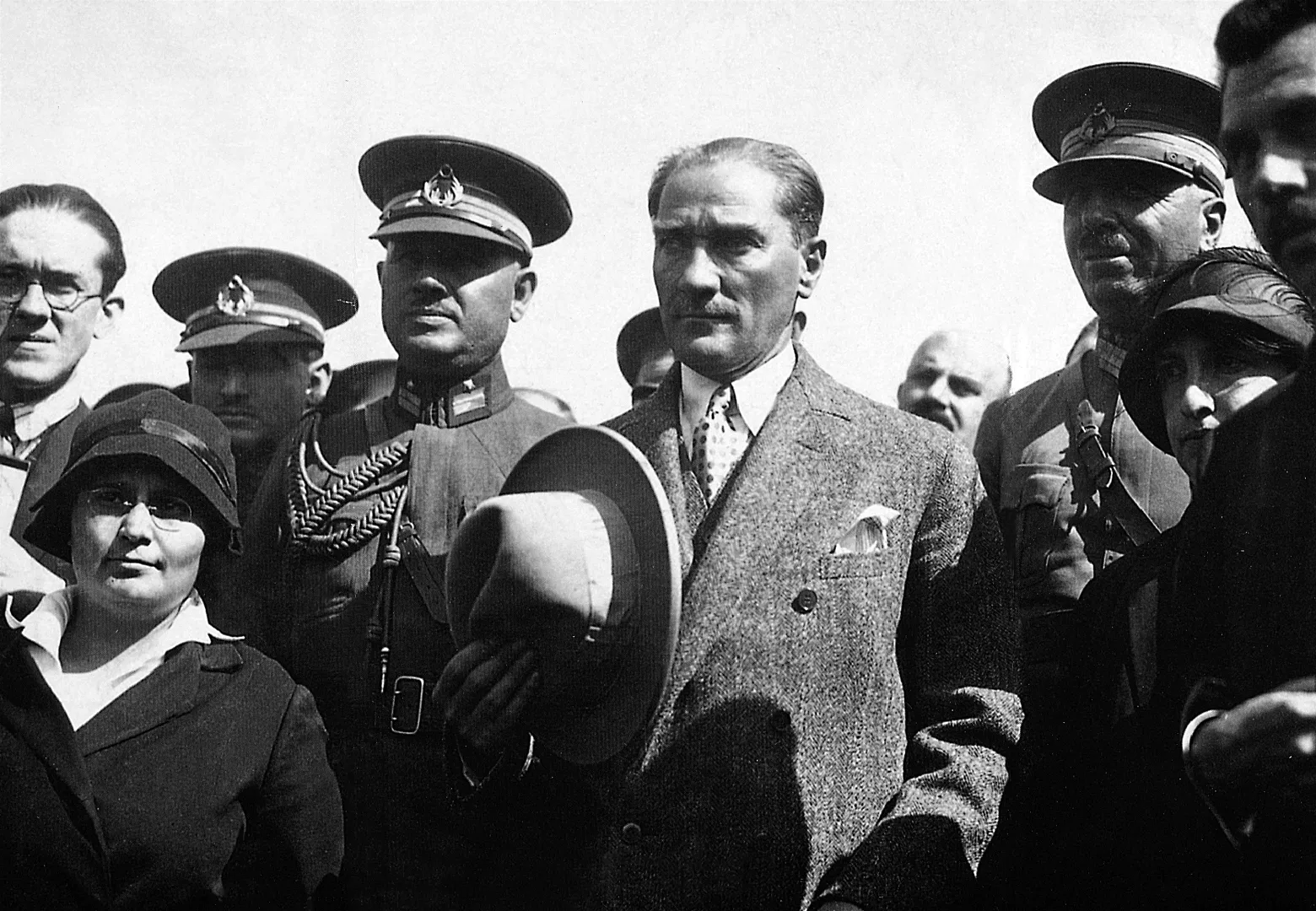
At the end of August he went to Kastamonu and İnebolu, and it was there that he introduced the hat to the public.35
1926
On 17 February the Civil Code was adopted. Women and men became equal in marriage, divorce and inheritance.36
1928
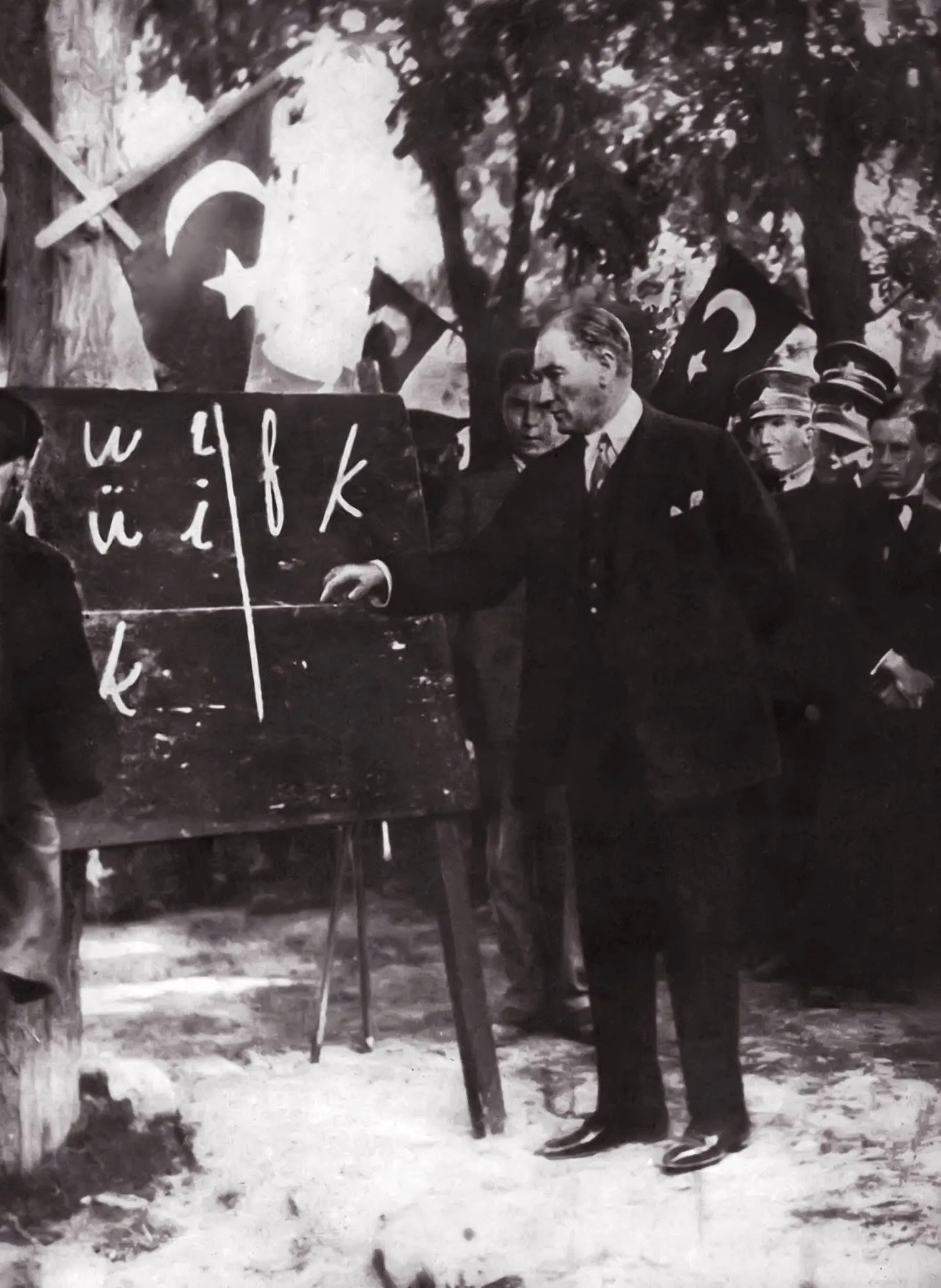
On the night of 9–10 August he announced the new letters at Sarayburnu.6 Then he set out with a blackboard: Tekirdağ, Sinop, Kayseri. The law followed on 1 November.37
1930
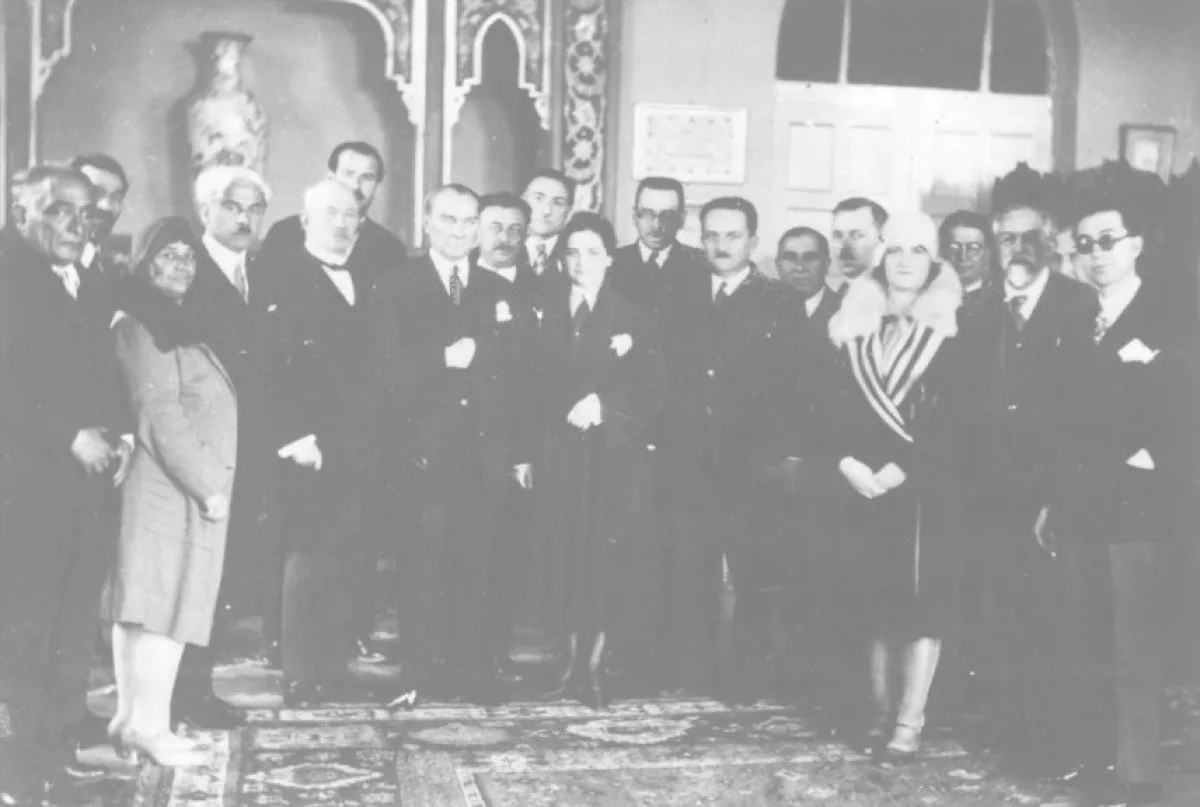
On 3 April women gained the right to vote and stand in municipal elections.38
1934
On 24 November the Assembly gave him the surname “Atatürk”.39 On 5 December women won the right to vote and stand for parliament; the following year 18 women entered the Assembly.38
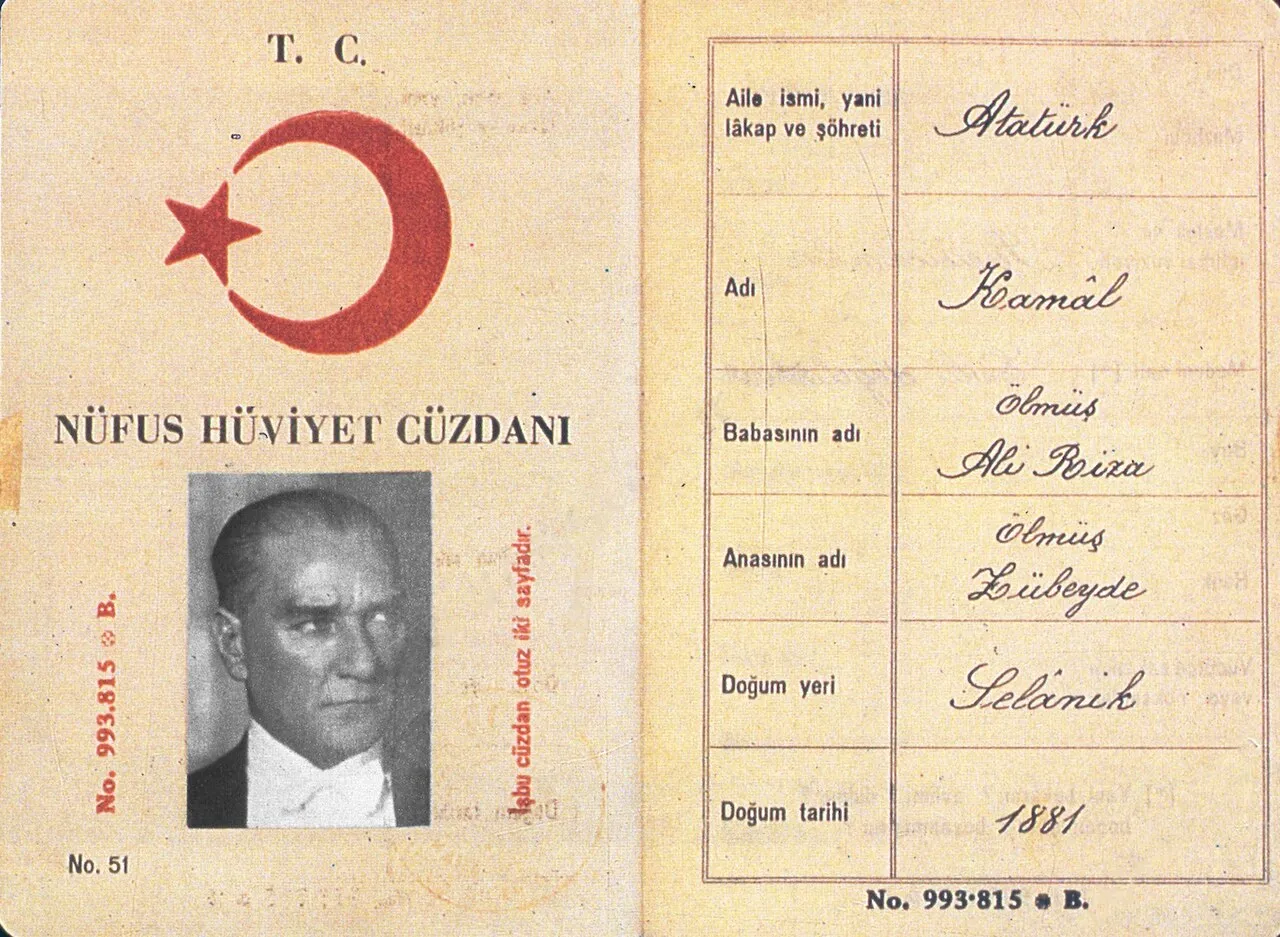
Dünyada her şey için, medeniyet için, hayat için, muvaffakiyet için en hakiki mürşit ilimdir, fendir.
For everything in the world, for civilisation, for life, for success, the truest guide is knowledge, is science.
Samsun, 22 September 192440
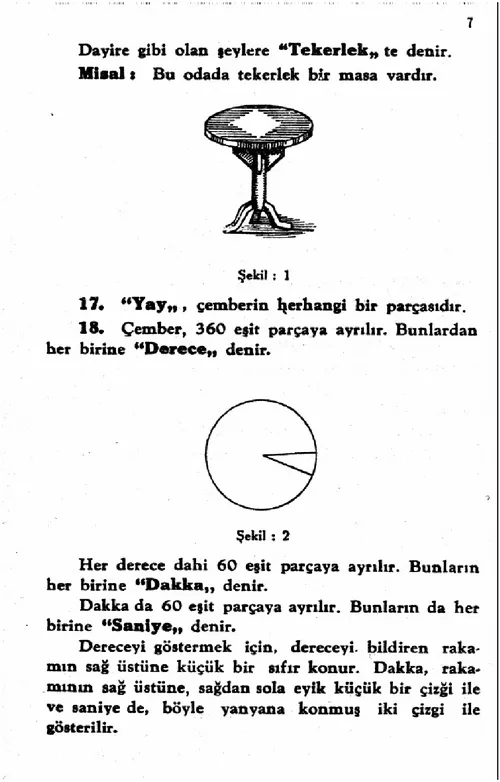
1927 — 1937
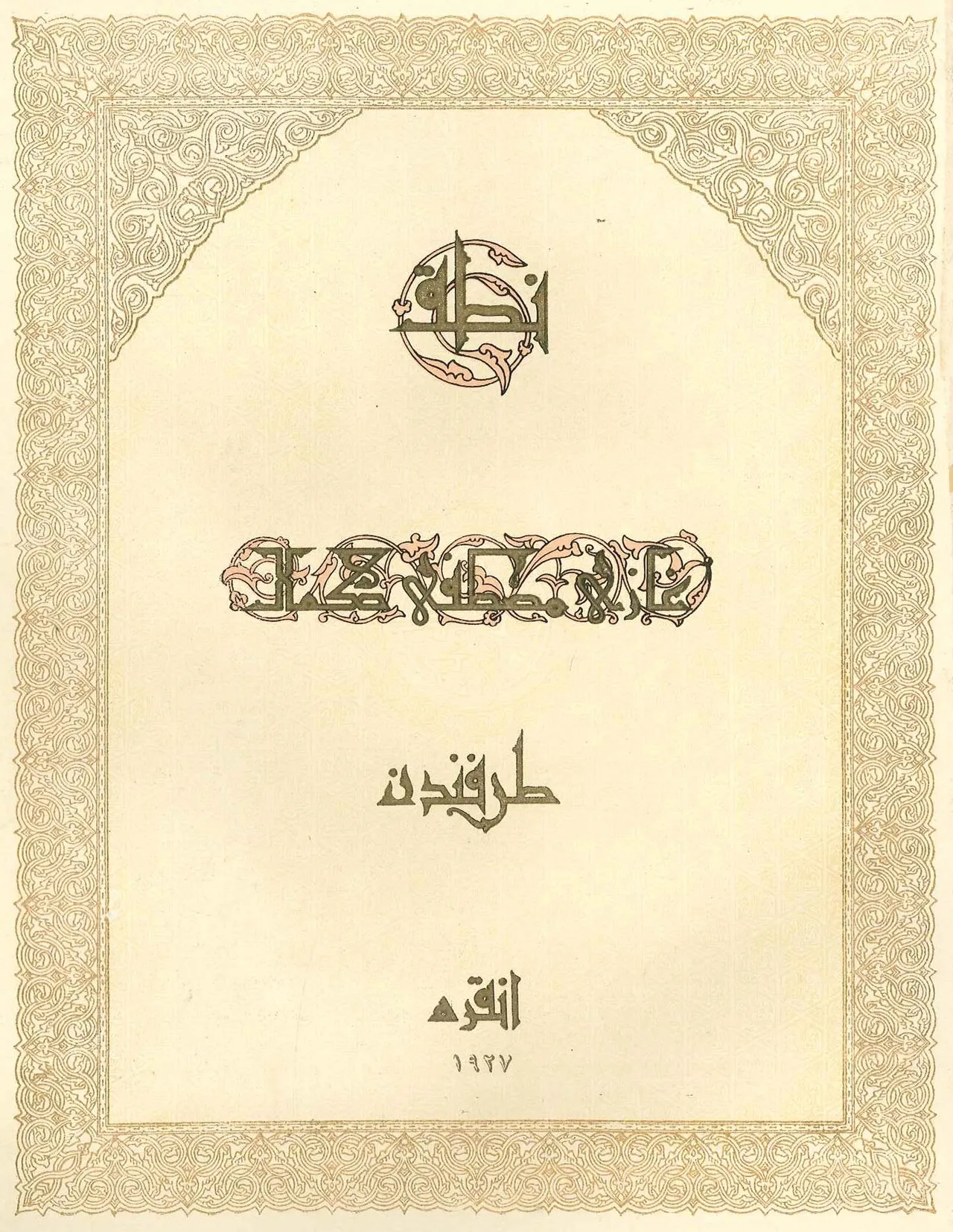
On 15 October 1927, at his party’s congress in Ankara, he went to the rostrum and began to recount what had happened since 1919. The speech was delivered over six days: 36 hours and 33 minutes in all. On the first day he covered the period from Samsun to the Sivas Congress.44
On the last page he addressed the youth.
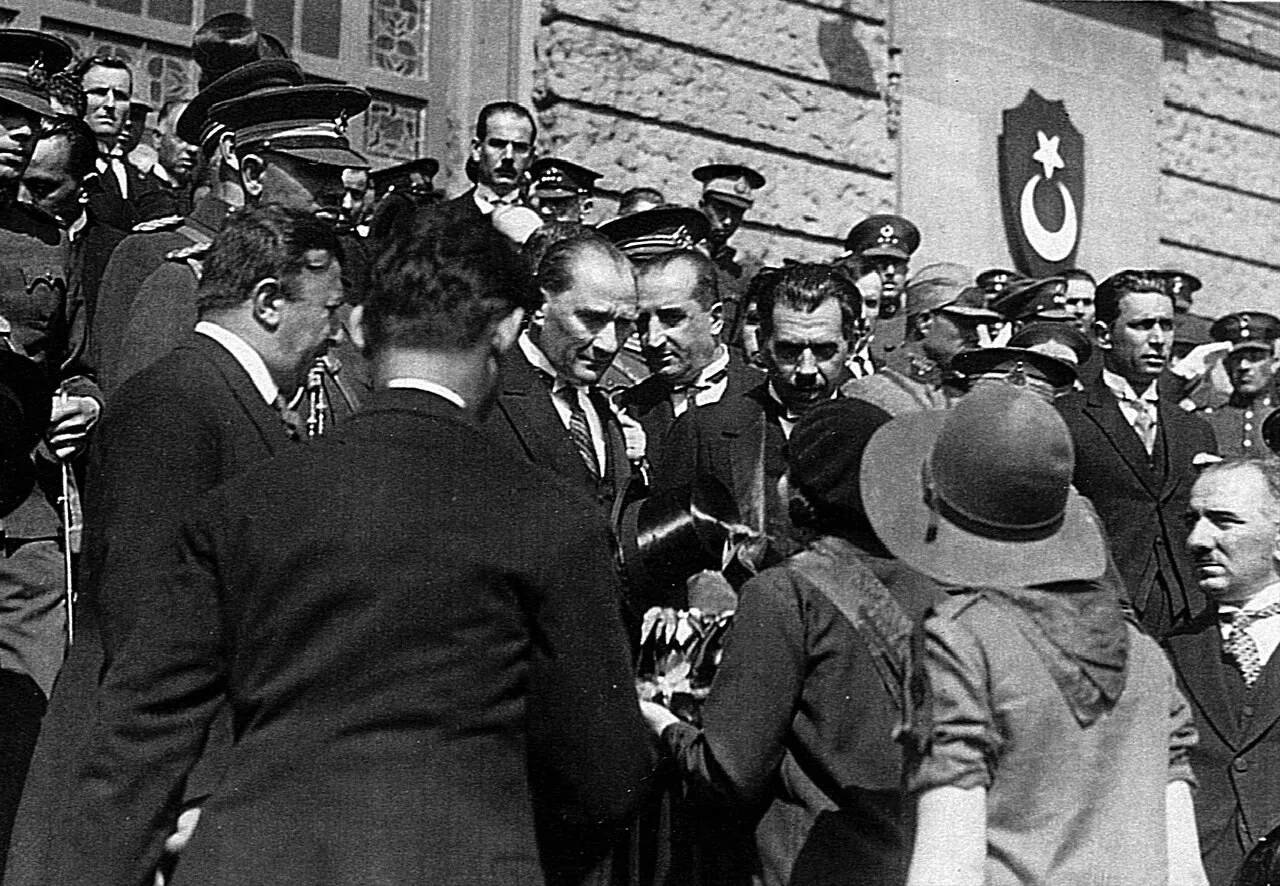
Ey Türk gençliği! Birinci vazifen, Türk istiklâlini, Türk Cumhuriyetini, ilelebet, muhafaza ve müdafaa etmektir.
Turkish youth! Your first duty is to preserve and defend, forever, Turkish independence and the Turkish Republic.
Nutuk, 20 October 192748
On 20 April 1931, in an election manifesto, he put foreign policy in one sentence: “We work for peace at home and peace in the world.”45 On 9 February 1934, in Athens, Turkey, Greece, Yugoslavia and Romania signed the Balkan Entente.46
In January of that year Venizelos, former prime minister of the country he had fought twelve years earlier, had nominated him for the Nobel Peace Prize.47
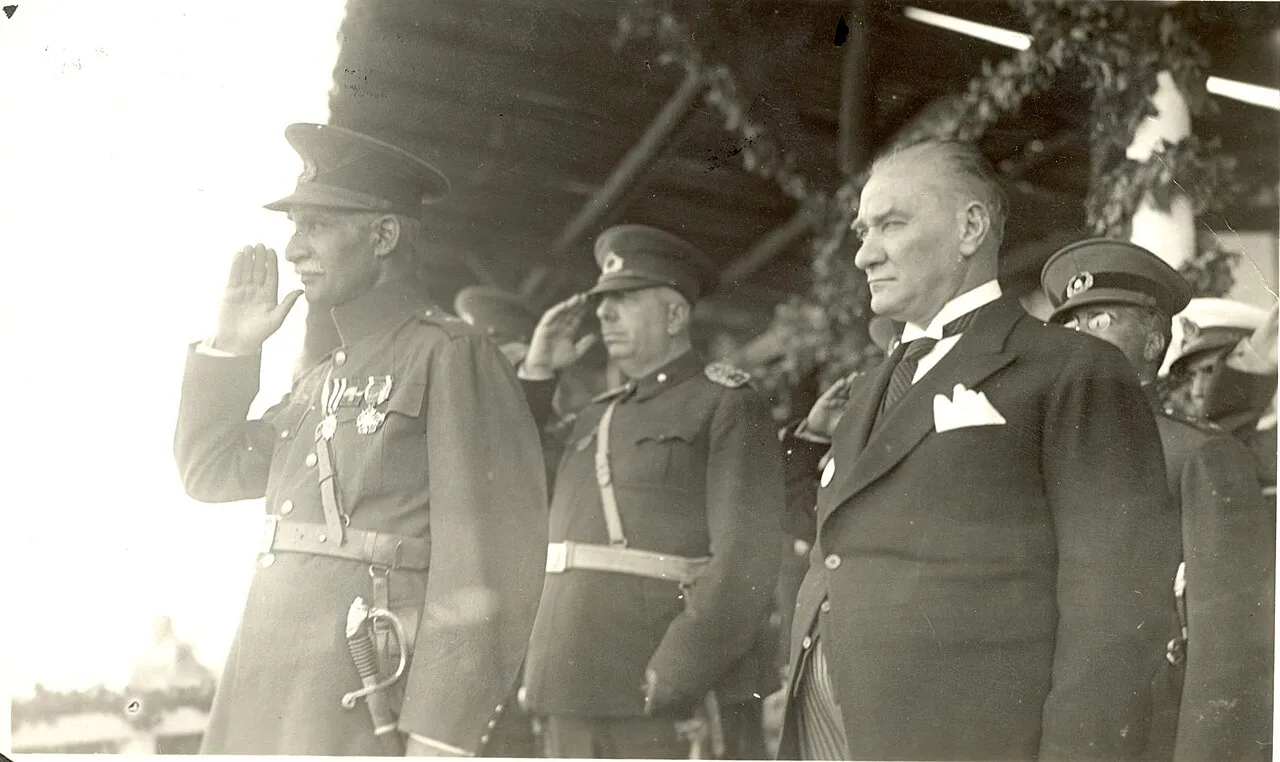
Çankaya — Florya
Anıtkabir displays 3,123 volumes from his private library.49 Many carry notes in the margins in his own hand.50
In 1925 he started a farm outside Ankara; twelve years later, on 11 June 1937, he gave it to the Treasury.51
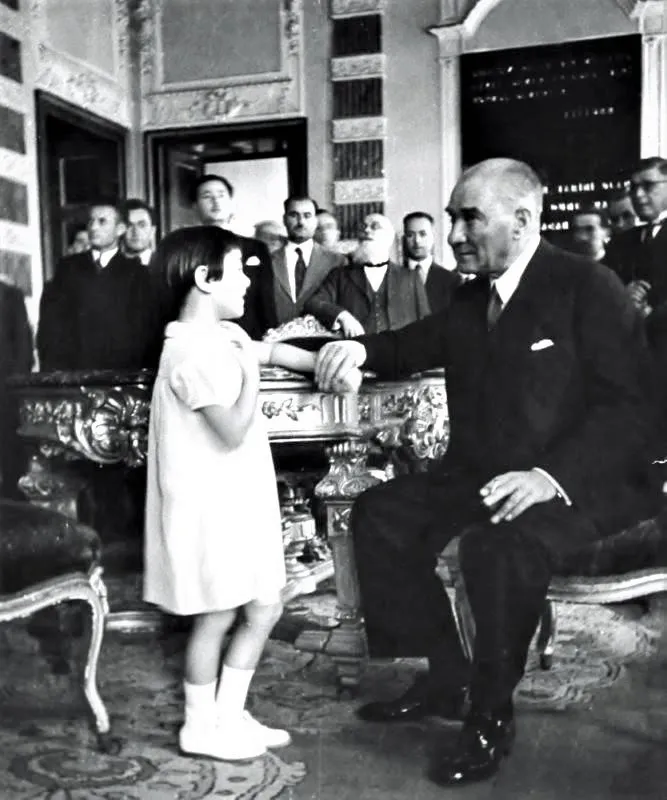
Among those he raised as his own children were Sabiha, Afet, Rukiye, Nebile and little Ülkü.52 Ülkü was at Atatürk’s side through his last years.
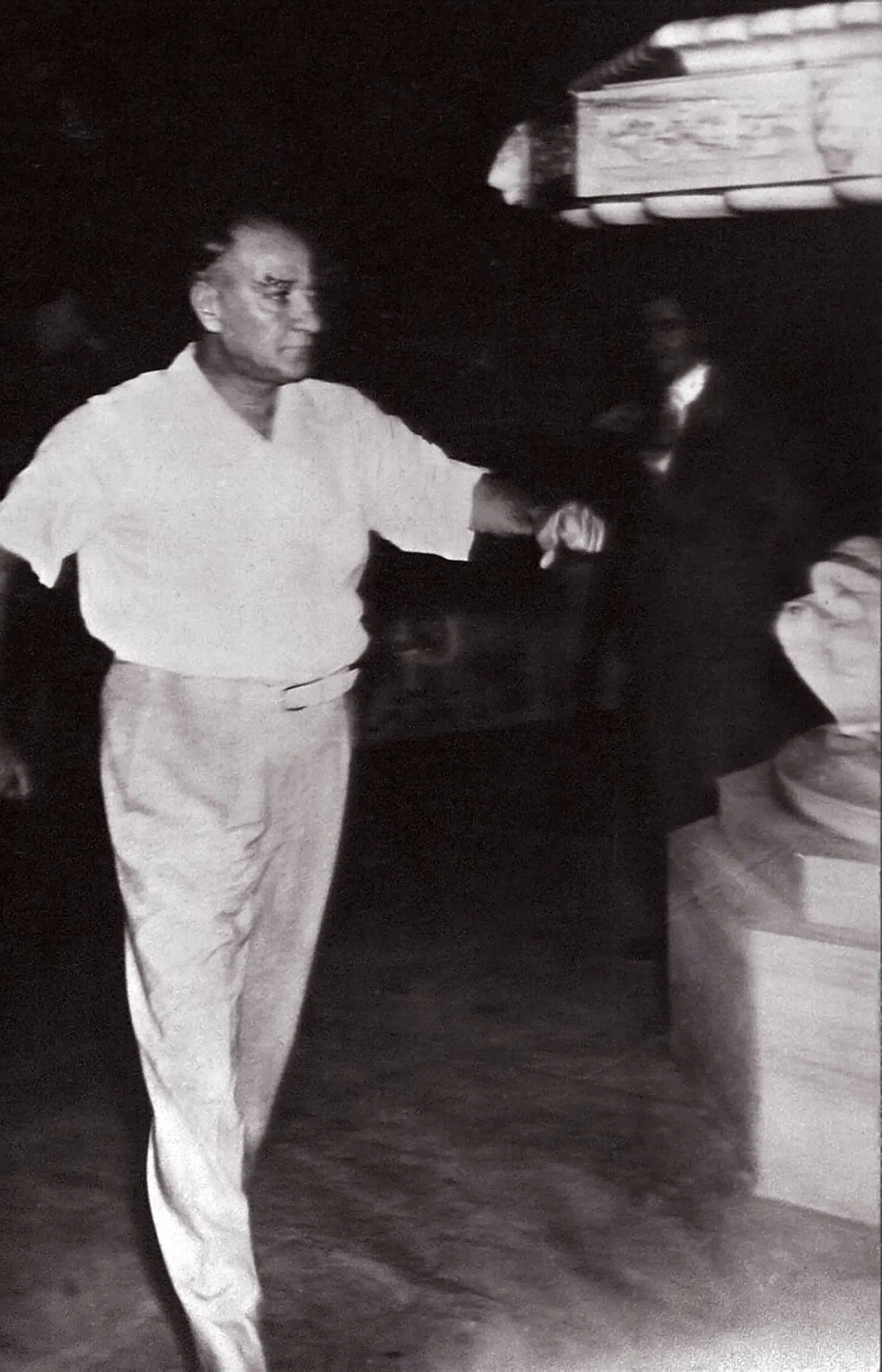
He was born in Rumelia, and evening conversations often came round to songs. He wanted the zeybek to become a national dance. In September 1936, at the Balkan festival at Beylerbeyi, he got up and danced it himself.53
The songs he loved
These are the recordings playing on this page; touch a title to listen. The list follows the Ministry of Culture and Tourism’s compilation.54
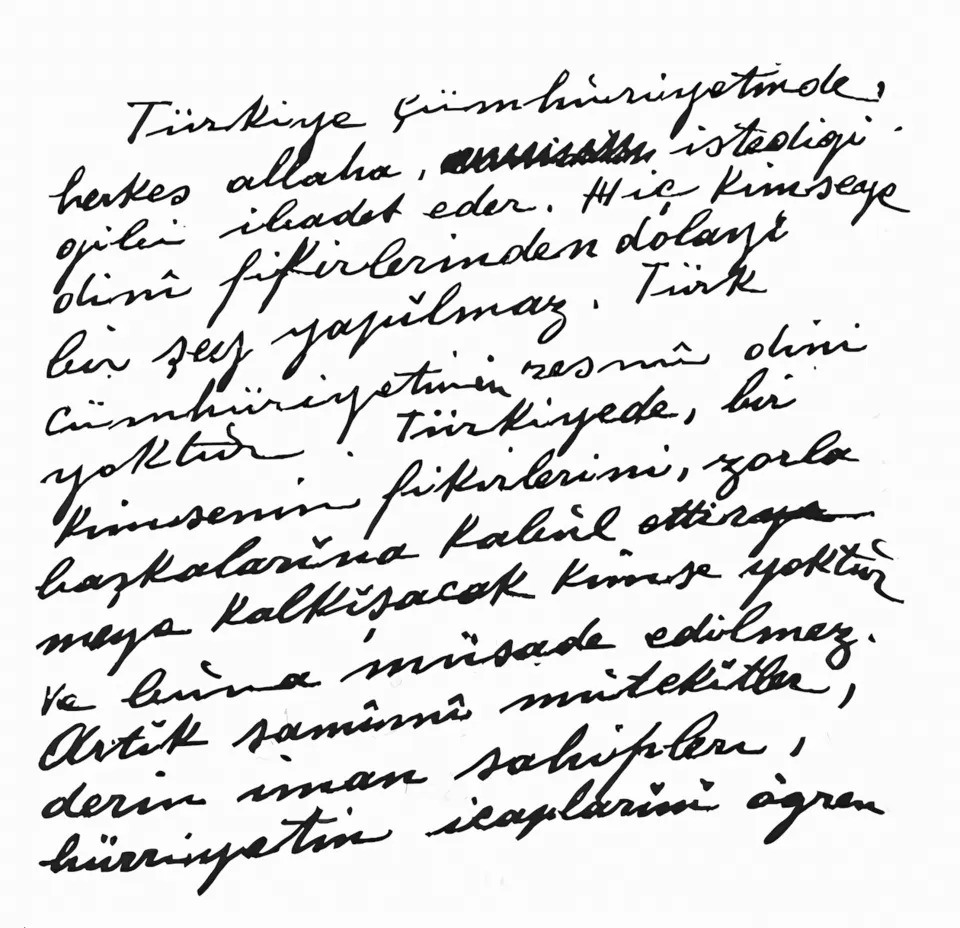
In his own hand
A few lines written from the front, from the road, from his sickbed. All are taken from published texts.
To Salih BozokUrla, 4 October 1911
Senin vasıtanla valideme verilmek üzere Kerim Beye kırk lira bıraktım. […] Sen de bana yazarsın.59
I have left forty lira with Kerim Bey, to be given to my mother through you. […] And you will write to me.
Written on the way, as he slipped off in secret to Tripolitania. His first concern was the money he would leave his mother.
To Corinne LütfüMaydos, 17 March 1915
Geçmiş zaman ve geçmiş zamanın hatıraları ebedi bir hayata maliktir. Beni unutmayınız Corinne, hatta bu harpte ölsem bile.60
The past, and the memories of the past, possess an eternal life. Do not forget me, Corinne, even if I should die in this war.
At Gallipoli, the day before the naval battle of 18 March. He wrote most of his letters to Corinne in French;61 the text here is as it was published in Turkish.
To his foster sister Saime HanımSilvan, 26 October 1916
Arzunuz veçhile bir fotoğrafımı takdim etmek benim için bir şeref olacaktı. Fakat yanımda bulunmadığı gibi burada aldırmak da şimdilik mümkün değil. […] Çocuklarınızla beraber gözlerinizden öperim.62
It would have been an honour to send you a photograph of myself, as you wish. But I have none with me, and having one taken here is not possible for now. […] I kiss your eyes, and your children’s.
A corps commander on the eastern front, writing to the foster sister he had not seen for eighteen years. The letter was found in the archives only recently.
To his mother, Zübeyde HanımAugust 1919
Muhterem Valideciğim, İstanbul’dan mufarakatımdan beri sizlere birkaç telgraftan başka bir şey yazmadım. Bu sebeple büyük merak içinde kaldığınızı tahmin ediyorum. […] Saygıyla ellerinizden, hemşiremin gözlerinden öperim.63
My dear, respected mother, since I left Istanbul I have written you nothing beyond a few telegrams. I imagine this has left you in great anxiety. […] I respectfully kiss your hands, and my sister’s eyes.
He had resigned from the army and was between the Erzurum and Sivas congresses. The Istanbul government was demanding his return.
To his adopted daughter Sabiha GökçenUndated, in pencil
Muaffakiyetle Ankara’dan Eskişehir’e geldiğini memnuniyetle öğrendim. […] İstanbul’a da muaffakiyetle gelmene intizar ederek gözlerinden öperim.64
I was glad to learn that you have reached Eskişehir from Ankara safely. […] Looking forward to your safe arrival in Istanbul too, I kiss your eyes.
A note to his adopted daughter while she was flying from Ankara to Istanbul (original spelling kept). Gökçen gave it to the Anıtkabir museum.
To Afet İnanSavarona, 14 June 1938
Afet, H. R. Soyak ile, benden mektup beklediğini bildirmiştin. Arzun her gün hatırımdadır. […] Bence doktorların yanlış görüş ve hükümleri sebebiyle hastalık durmamış, ilerlemiştir.65
Afet, you let me know through H. R. Soyak that you were expecting a letter from me. Your wish is on my mind every day. […] In my view, because of the doctors’ mistaken opinions and judgments, the illness has not stopped; it has advanced.
Five months before his passing, writing frankly about his illness to his adopted daughter, who was abroad.
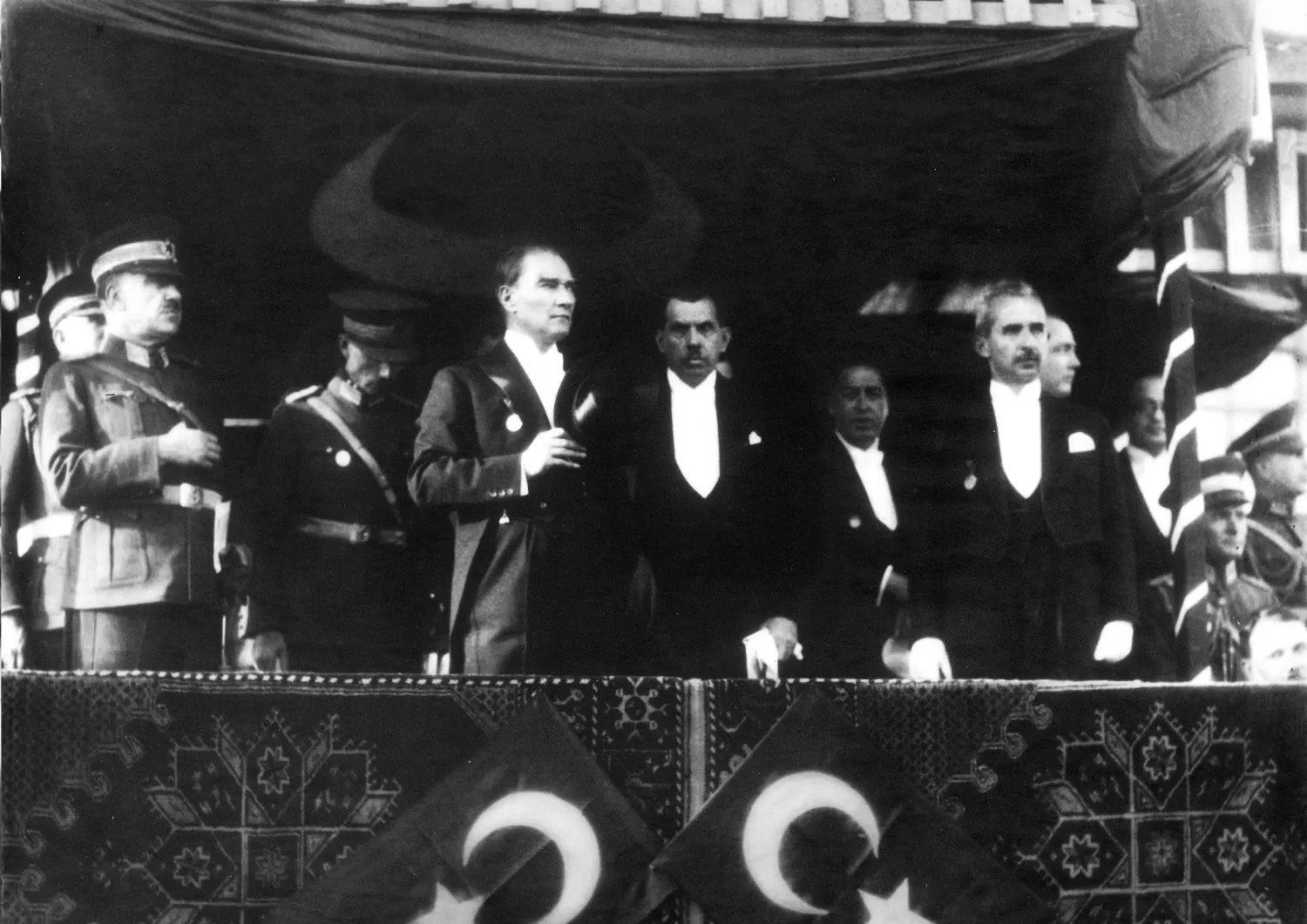
Ankara, 29 October 1933
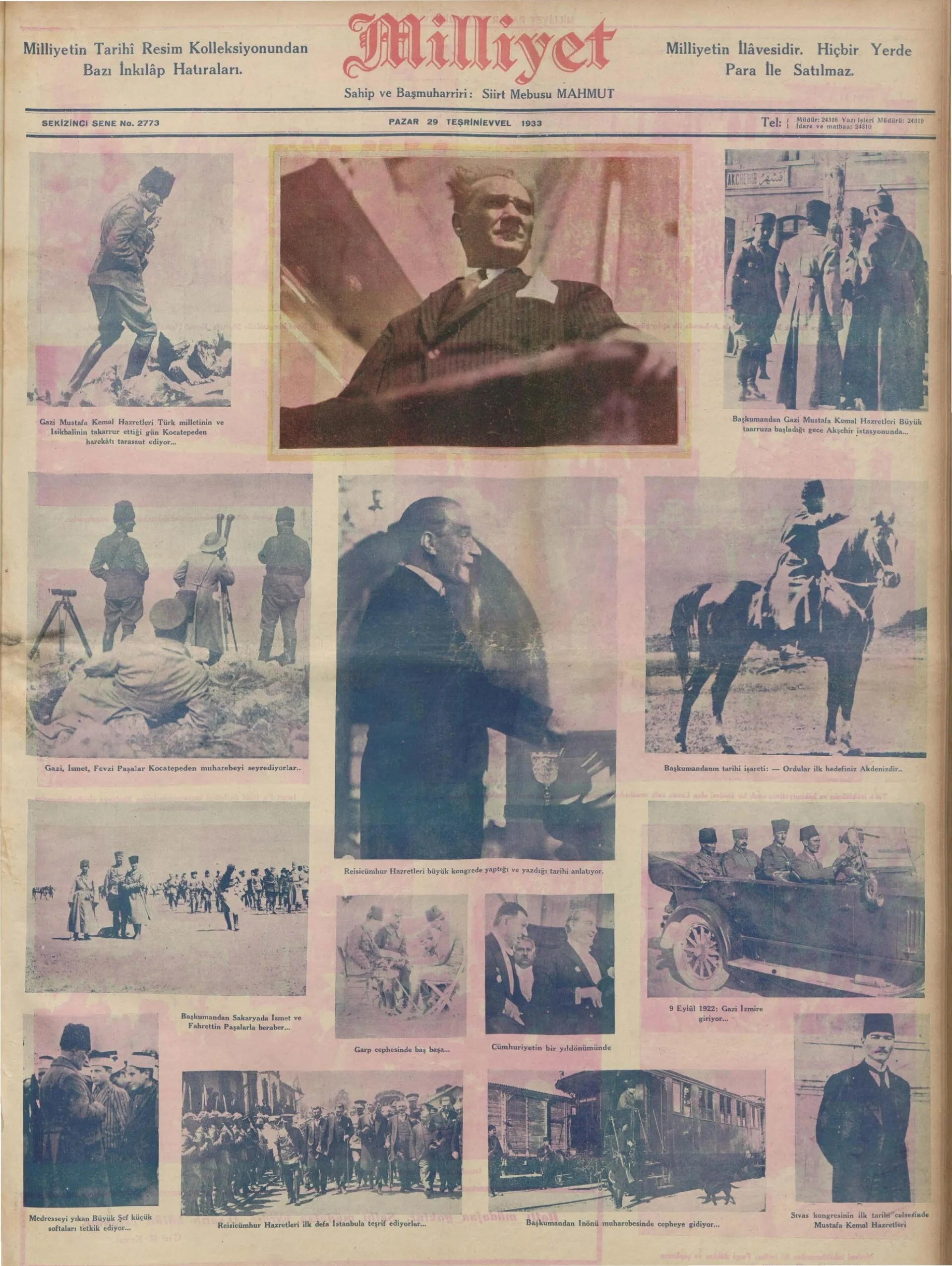
The Republic was ten years old. He had written the first draft of the speech himself, in pencil, on seven pages.66 He went to the rostrum in Ankara and spoke for seven minutes. His voice was recorded that day, and we can still hear it.
The text on screen is the speech as published by the Ministry of Culture and Tourism.67
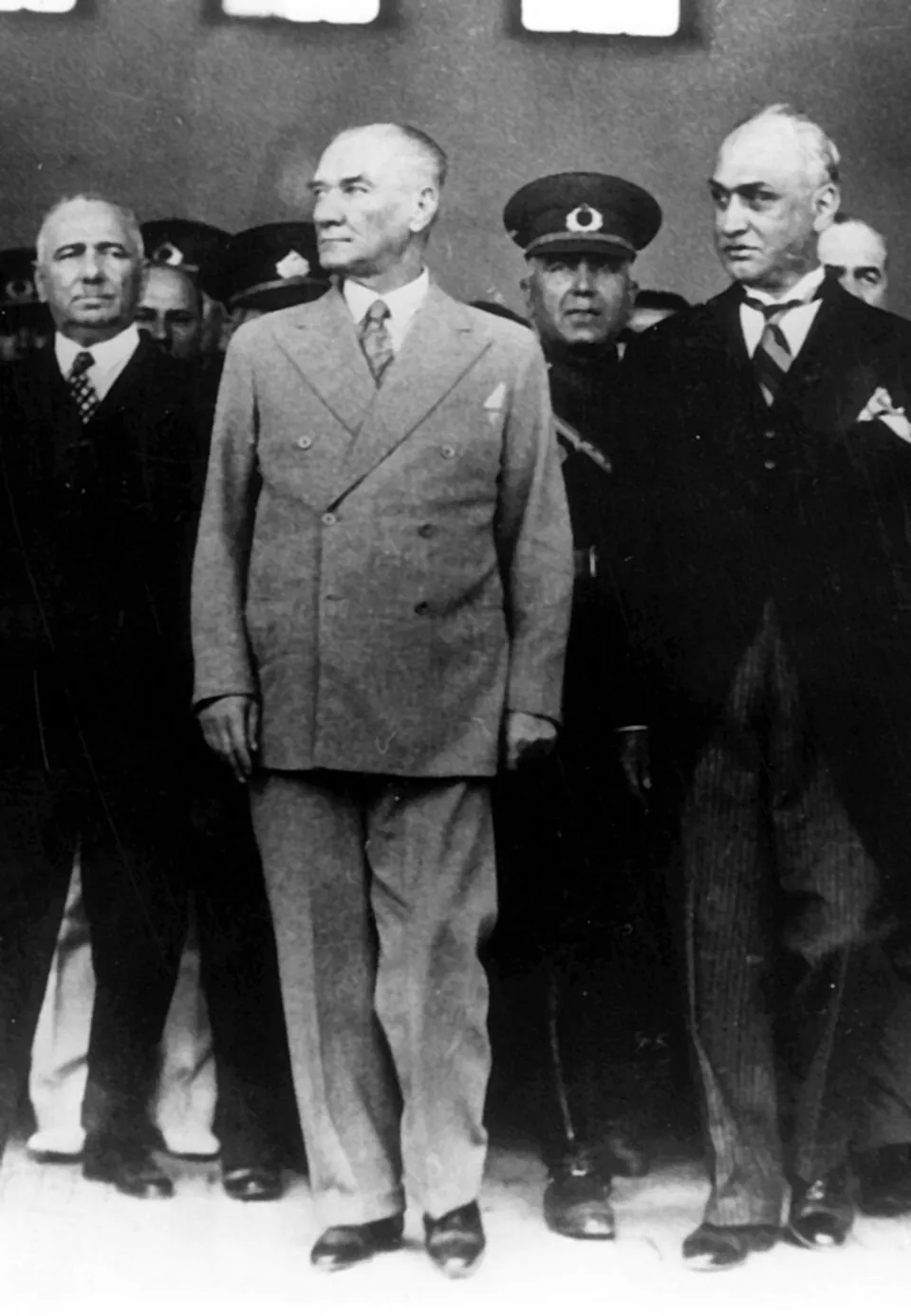
He regarded Hatay as his personal cause. On 2 September 1938 the independent State of Hatay was founded.68
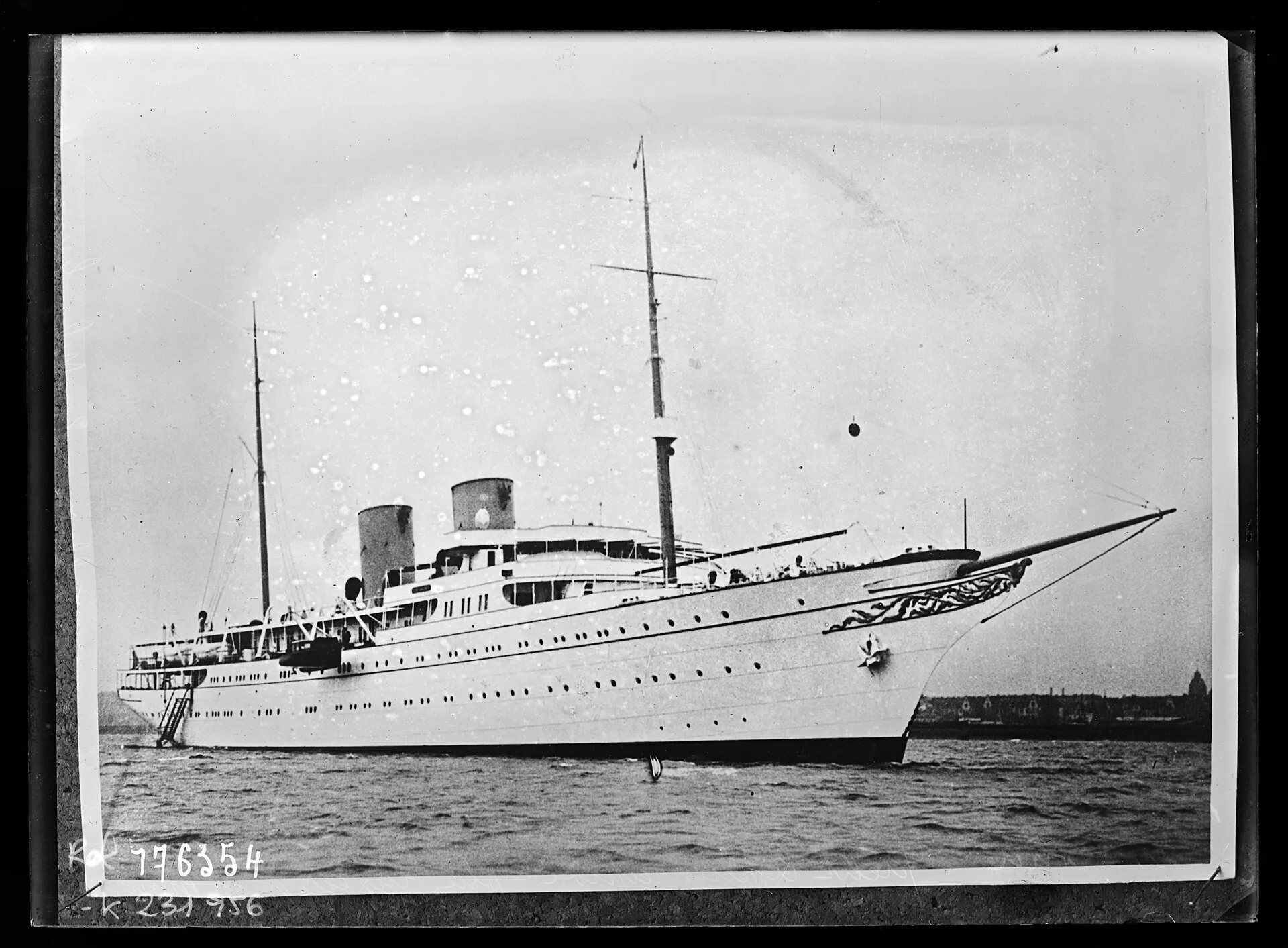
On 1 June the Savarona arrived in Istanbul. He went aboard that same afternoon and stayed for fifty-four days. On 25 July he moved to Dolmabahçe Palace.69
On 5 September 1938 he wrote his will in his own hand. He left monthly allowances to his sister Makbule and the children he had raised, and asked that the remaining income be divided equally between the Turkish Historical Society and the Turkish Language Society.70
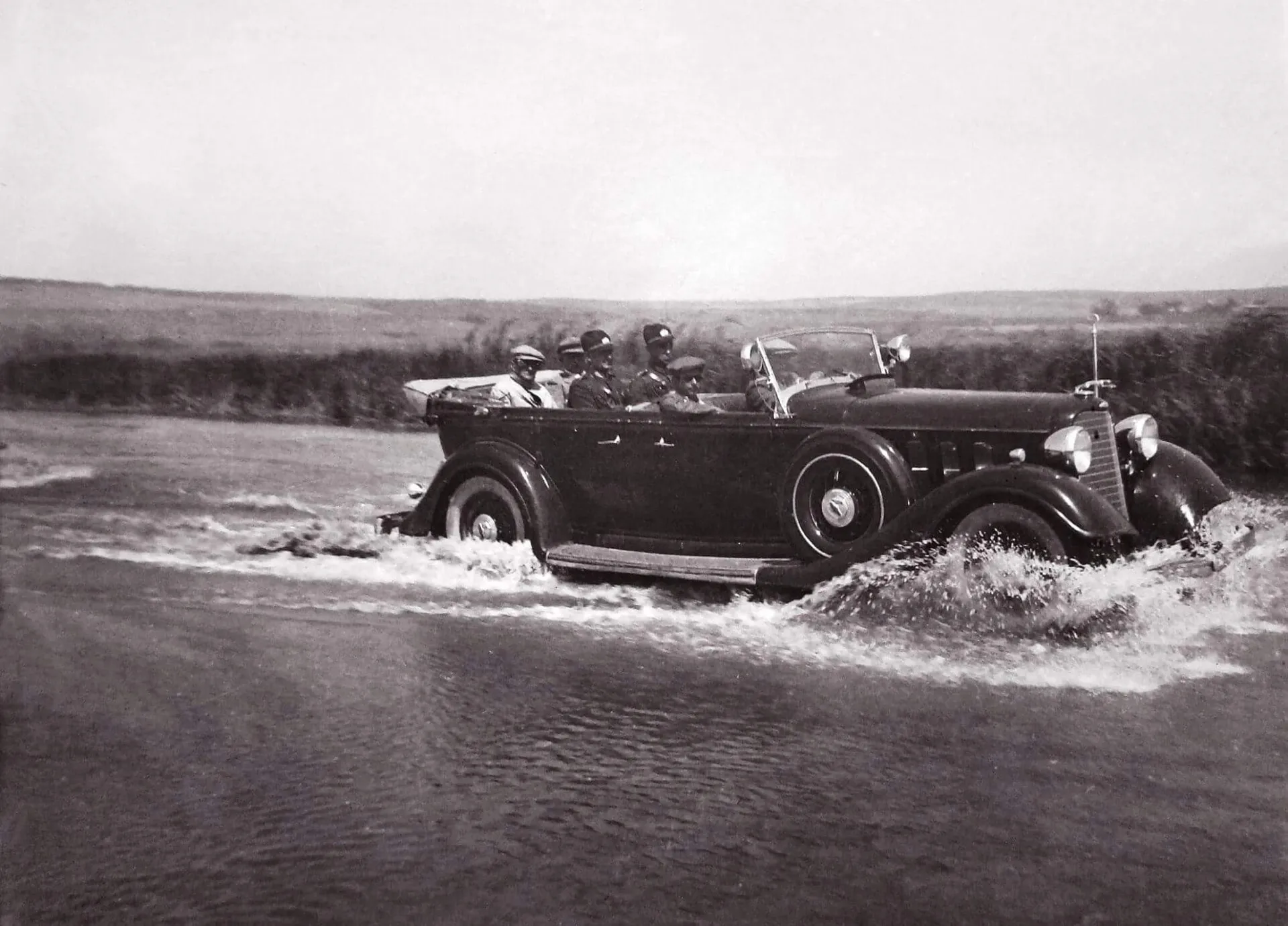
10 · 11 · 1938
In respectful memory of Atatürk.
On the evening of 8 November Atatürk’s illness worsened; towards seven he lost consciousness.71
On the morning of Thursday 10 November 1938, at five past nine, we lost Atatürk. He was fifty-seven.
Our condolences to the great Turkish nation.
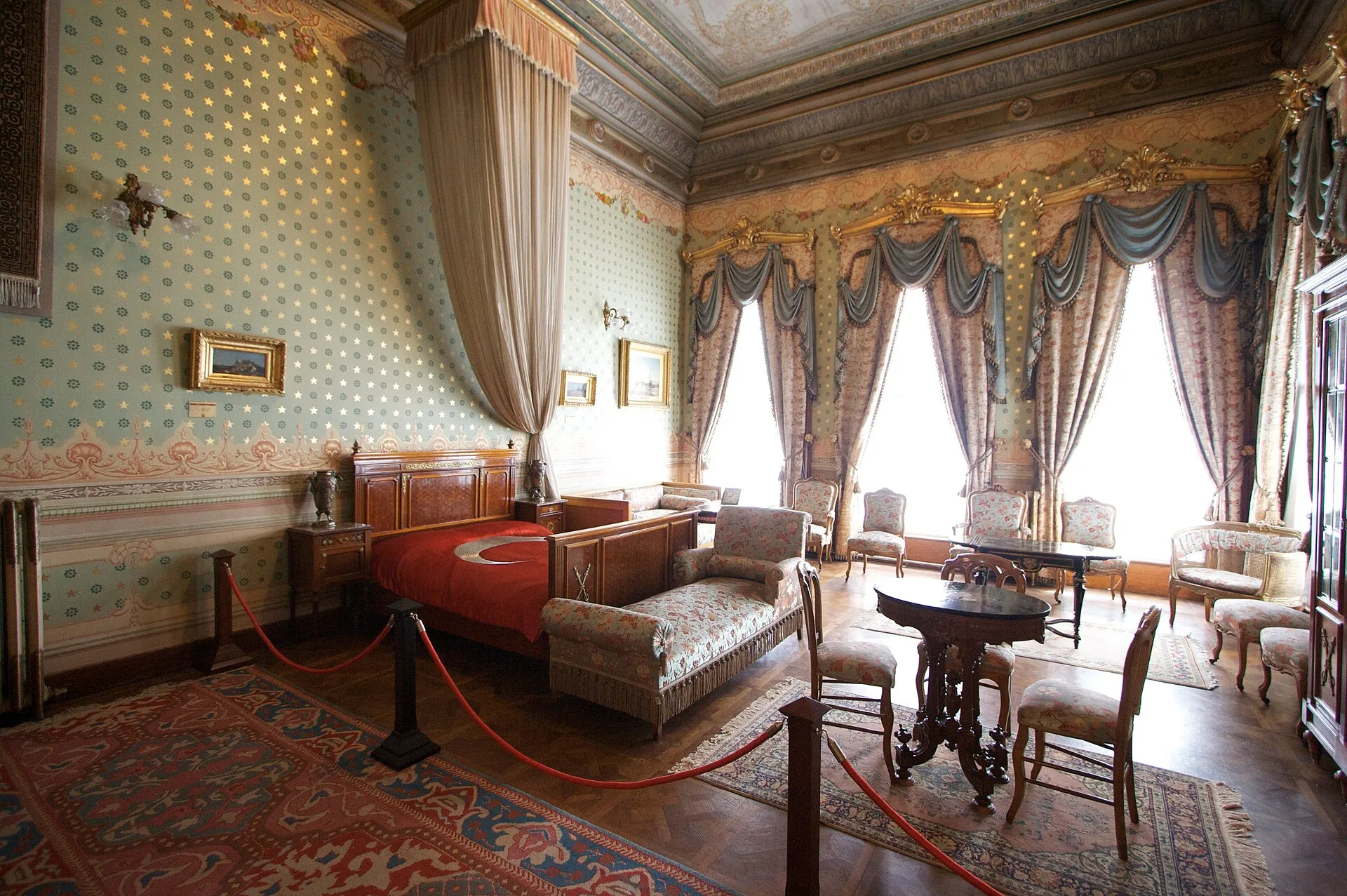
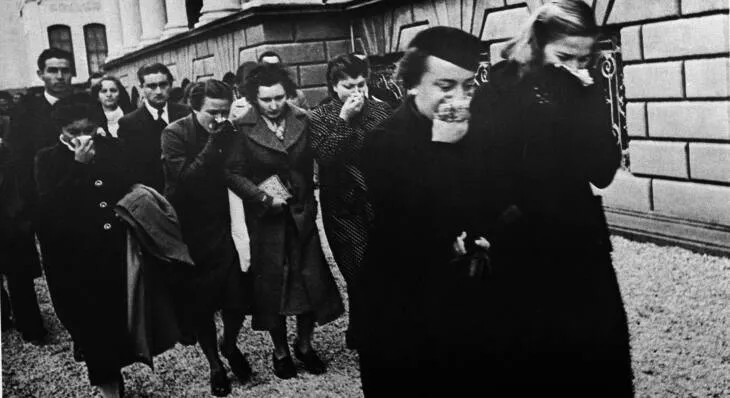
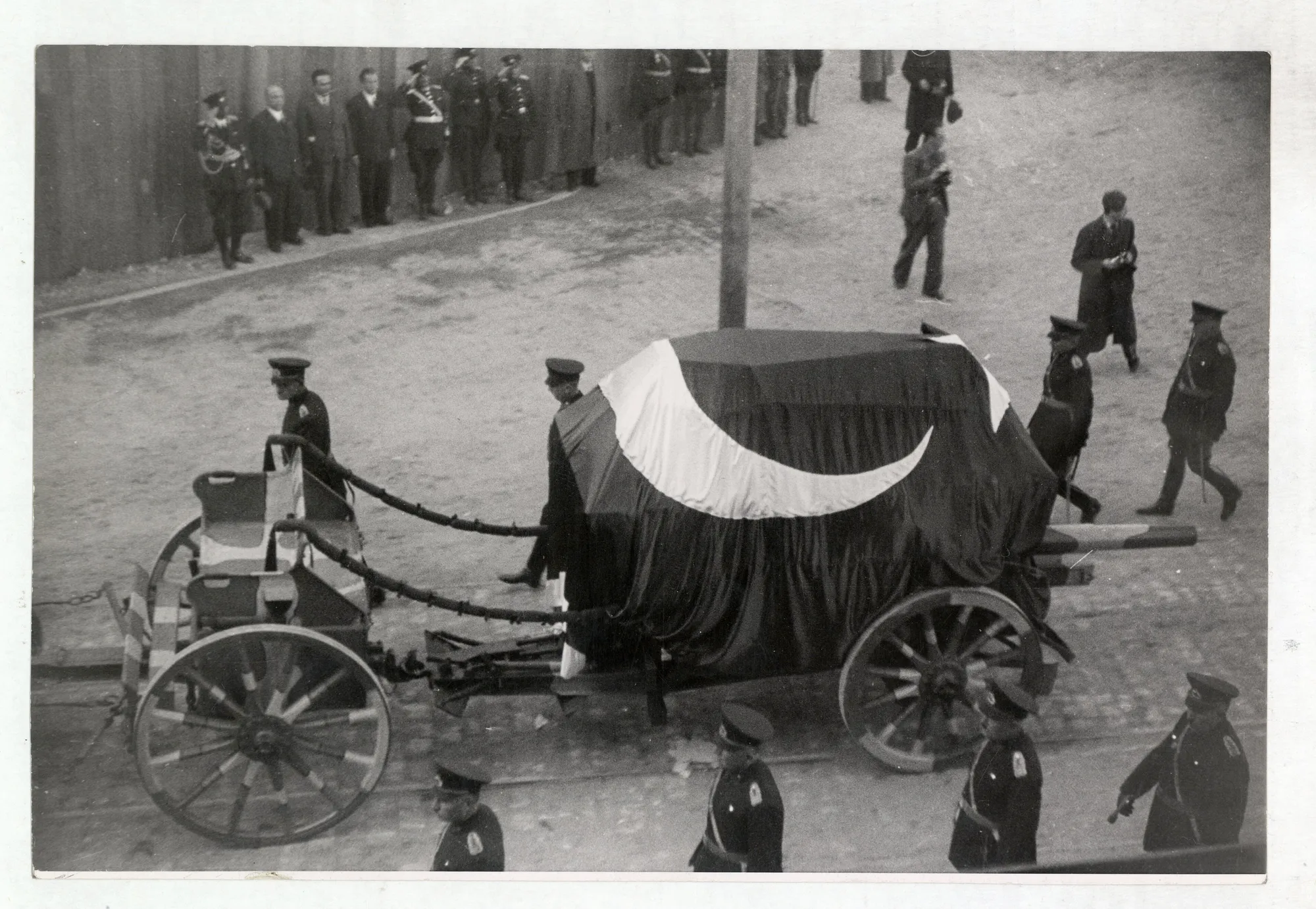
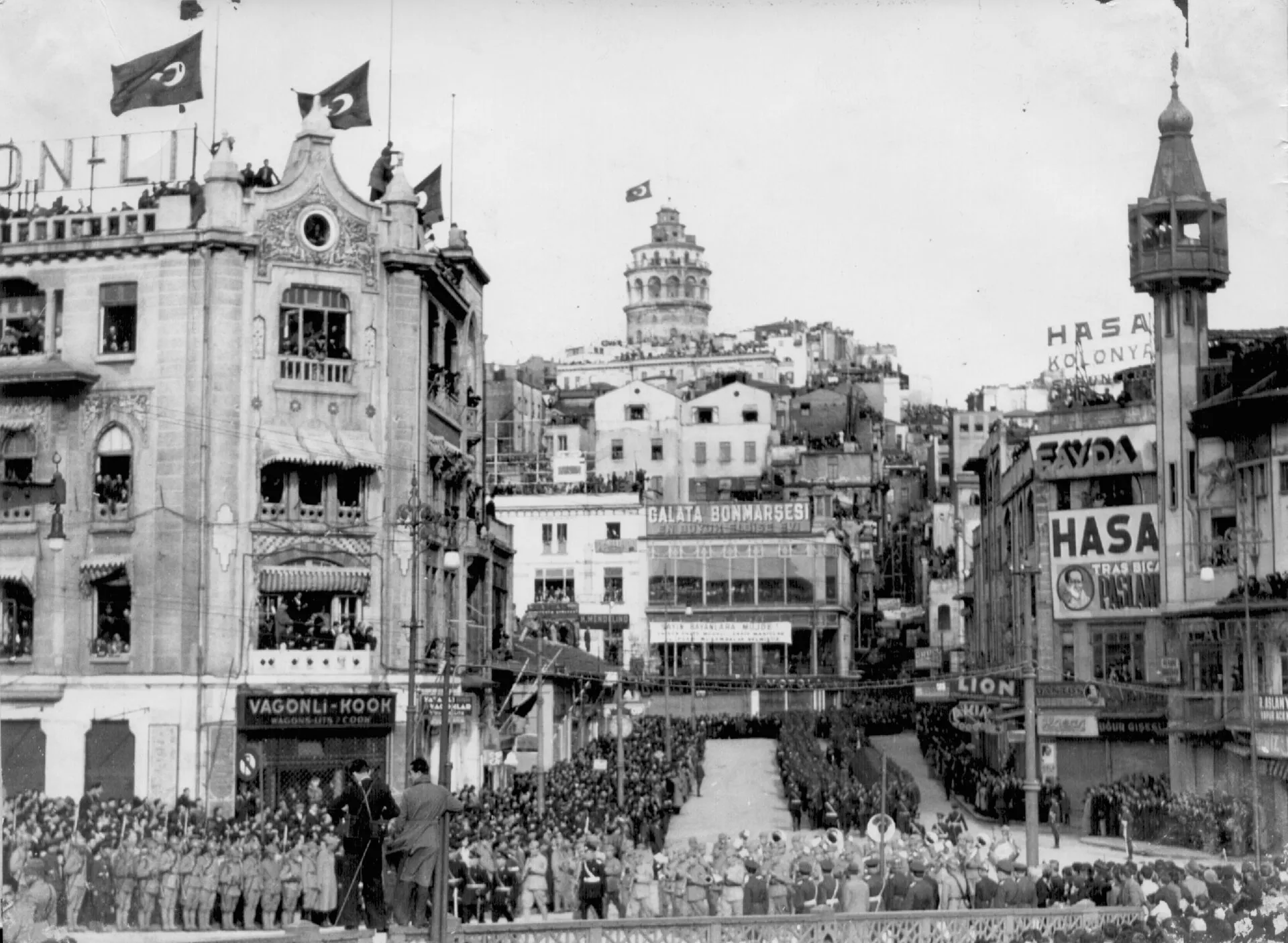
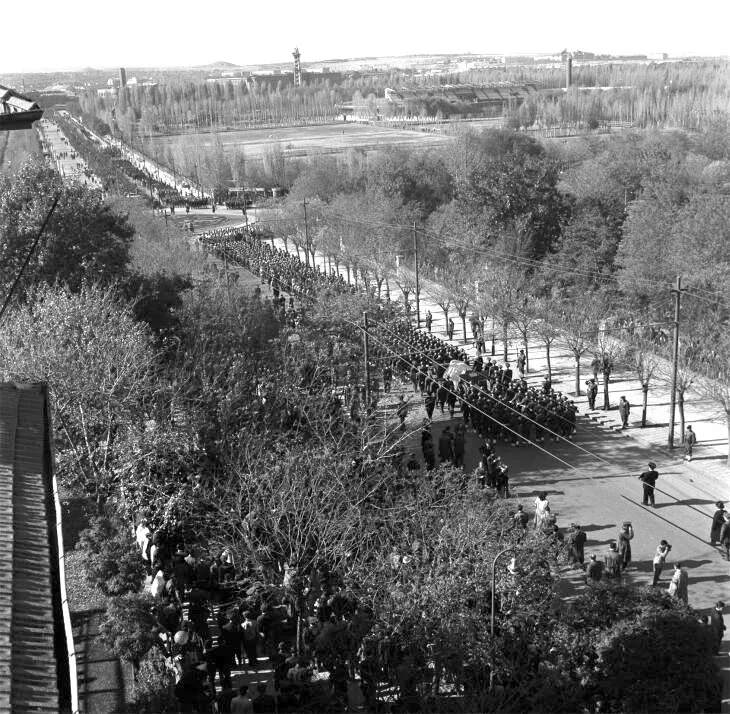
On 19 November the funeral prayer was said at Dolmabahçe. His remains were taken from Sarayburnu by the torpedo boat Zafer to the battleship Yavuz, from there to İzmit, and from İzmit by train to Ankara.72
In Ankara he lay in state for a night before the Assembly, on a catafalque designed by the architect Bruno Taut.73 On 21 November his remains were borne on a gun carriage to a temporary tomb in the Ethnography Museum; delegations from many countries attended.72
A competition open to Turkish and foreign architects was held for Anıtkabir; the design by Emin Onat and Orhan Arda was chosen.74 Fifteen years later, on 10 November 1953, his remains were transferred to Anıtkabir.72
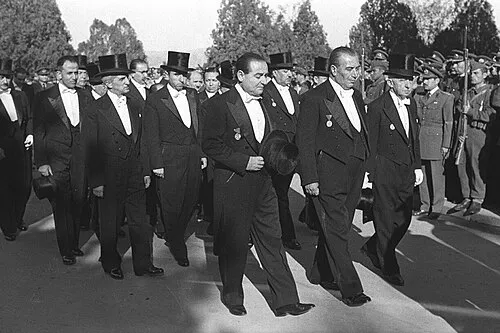
Önümde, arkamda sarsılan omuzlar ve yerlerde gözyaşıyla ıslanmış halılar görüyorum.76
In front of me and behind me I see shaking shoulders, and on the floor carpets wet with tears.
Hakkı Süha Gezgin journalist, before the catafalque at Dolmabahçe
Gözlüklerinin içi yaşla dolmuştu. Vücudu hafifçe öne eğilmiş, çehresi yorgun yavaş yavaş ağlayarak yürüyordu. Bu Başvekilimiz Celal Bayar’dı.76
The insides of his glasses had filled with tears. His body bent slightly forward, his face weary, he walked on, weeping quietly. This was our Prime Minister, Celal Bayar.
Reşat Nuri Güntekin novelist, in the Istanbul crowd on 19 November
Bütün millet ağlıyor sözü ilk defa benzetme olmaktan çıkmış.76
The phrase “the whole nation is weeping” has, for the first time, ceased to be a figure of speech.
Behçet Kemal Çağlar poet, who noted the procession minute by minute
Ben dokuz yaşında ve ilkokul dördüncü sınıf öğrencisiydim. […] 10 Kasım günü bayraklar yarıya inmişti.77
I was nine, in the fourth year of primary school. […] On 10 November the flags had been lowered to half-mast.
Coşkun Özdemir then a nine-year-old schoolboy in Urfa
Eşsiz kahraman Atatürk; vatan sana minnettardır.76
Peerless hero Atatürk: the homeland is grateful to you.
İsmet İnönü President, from his message to the nation, 21 November 1938
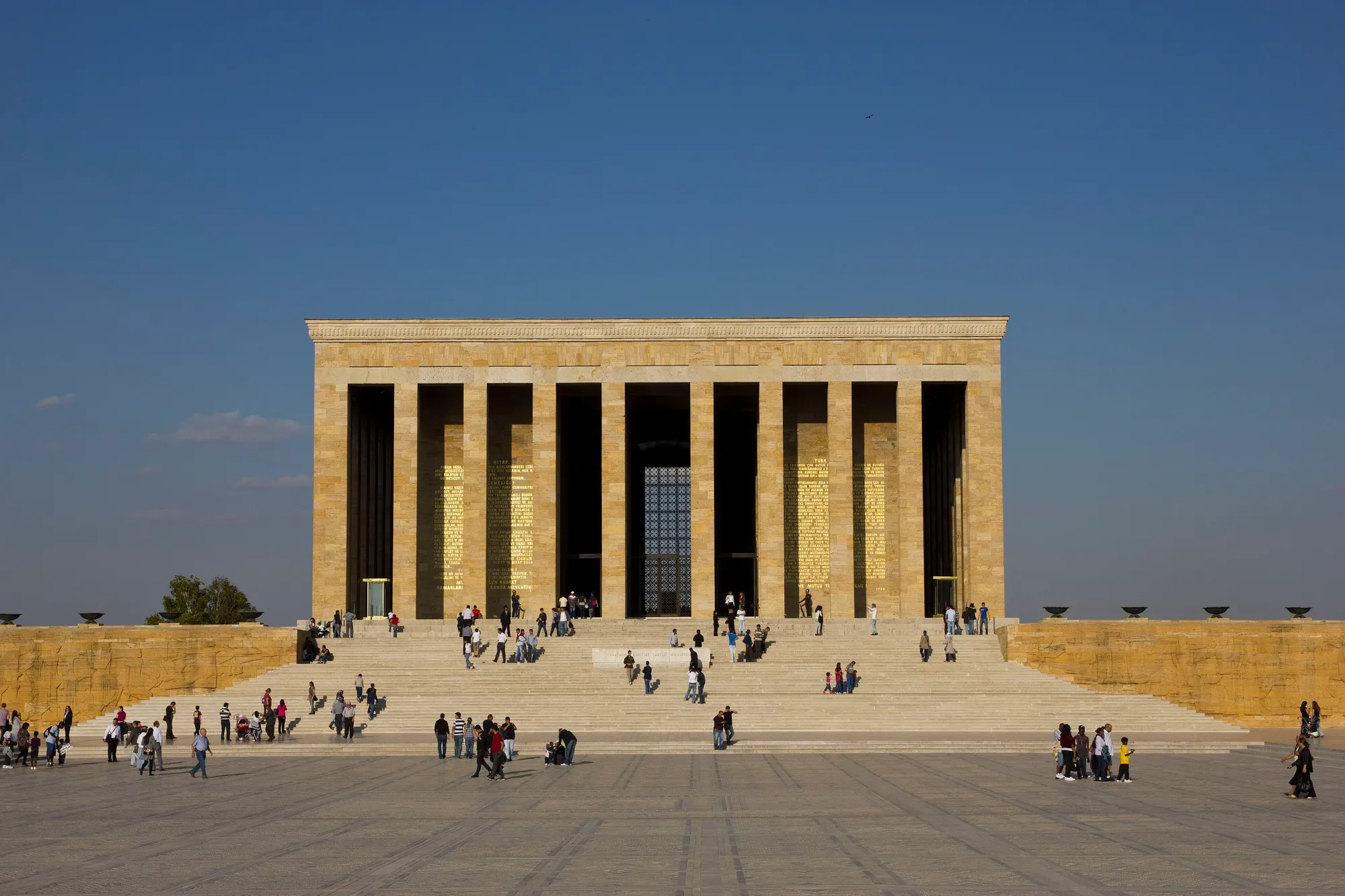
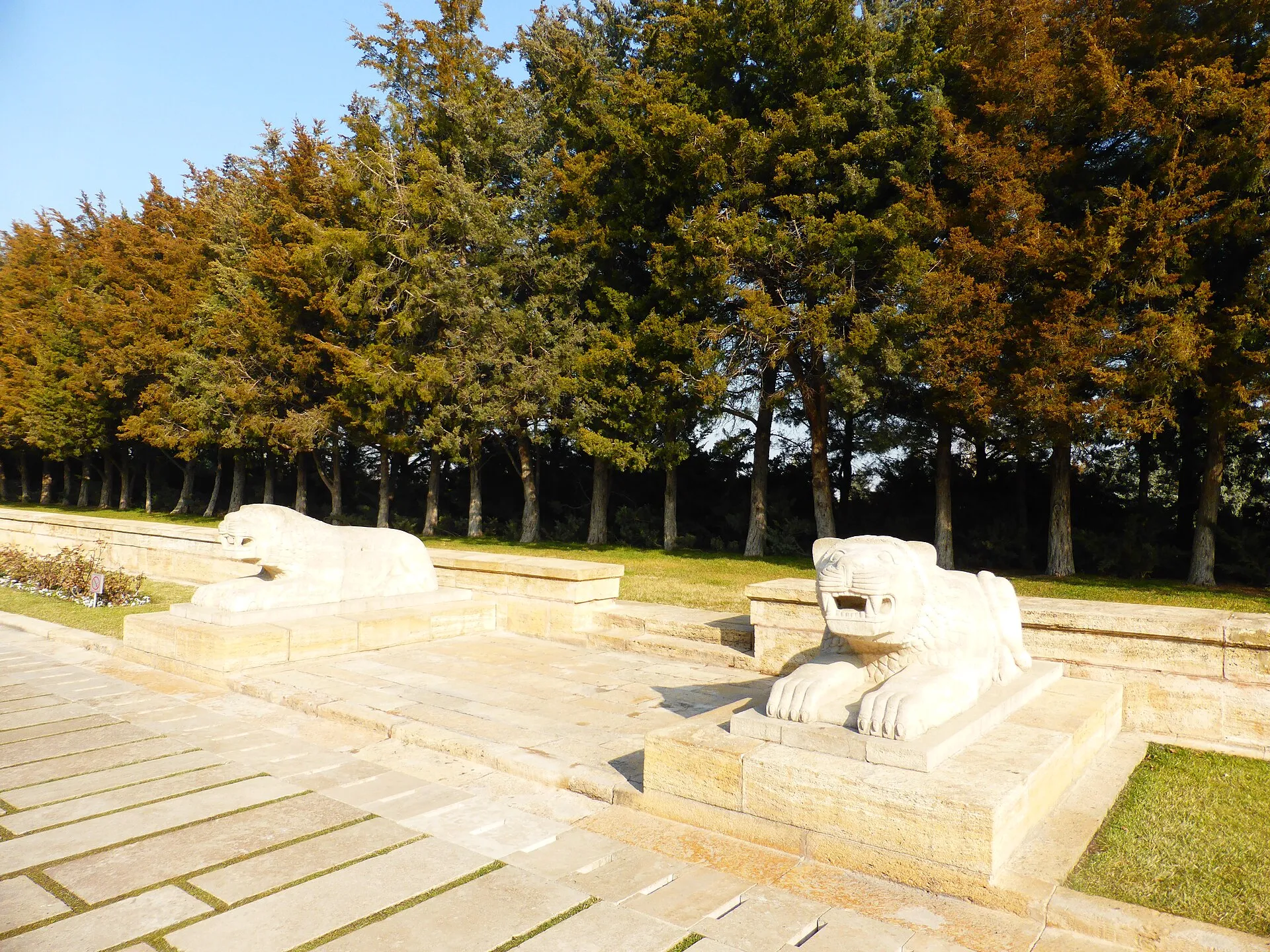
Every year on 10 November, at 09:05, the sirens sound and the whole country stands in silence.
Benim naçiz vücudum bir gün elbet toprak olacaktır, fakat Türkiye Cumhuriyeti ilelebet payidar kalacaktır.
My mortal body will one day turn to dust, but the Republic of Turkey will stand forever.
18 June 192675
09:05
Every 10 November, at 09:05, life comes to a halt.
The Republic he founded lives on.
Since 29 October 1923
Let us keep faith with what he entrusted to us.